

The first time I really thought about nasi lemak calories, I was standing at a coffeeshop in Ang Mo Kio, holding a warm banana-leaf packet that had already left an oil stain on the paper bag. I was in my twenties, trying to eat “better,” and I had convinced myself that because the packet was small, it must be light.
I was wrong. Very wrong.
That little parcel of coconut rice, sambal, ikan bilis, peanuts, and a folded egg was probably close to 500 calories before I even added the fried chicken wing I ordered on the side. But here is the thing: I don’t regret eating it. Nasi lemak is one of those dishes that carries memory in it. My point is only this. If you understand the calorie content and nutritional information of what you’re actually eating, you can enjoy it without guilt, and without accidentally turning breakfast into a heavier meal than your dinner.
Let me walk you through what I’ve learned over the years, mistakes and all.
Why Nasi Lemak Calories Vary So Much
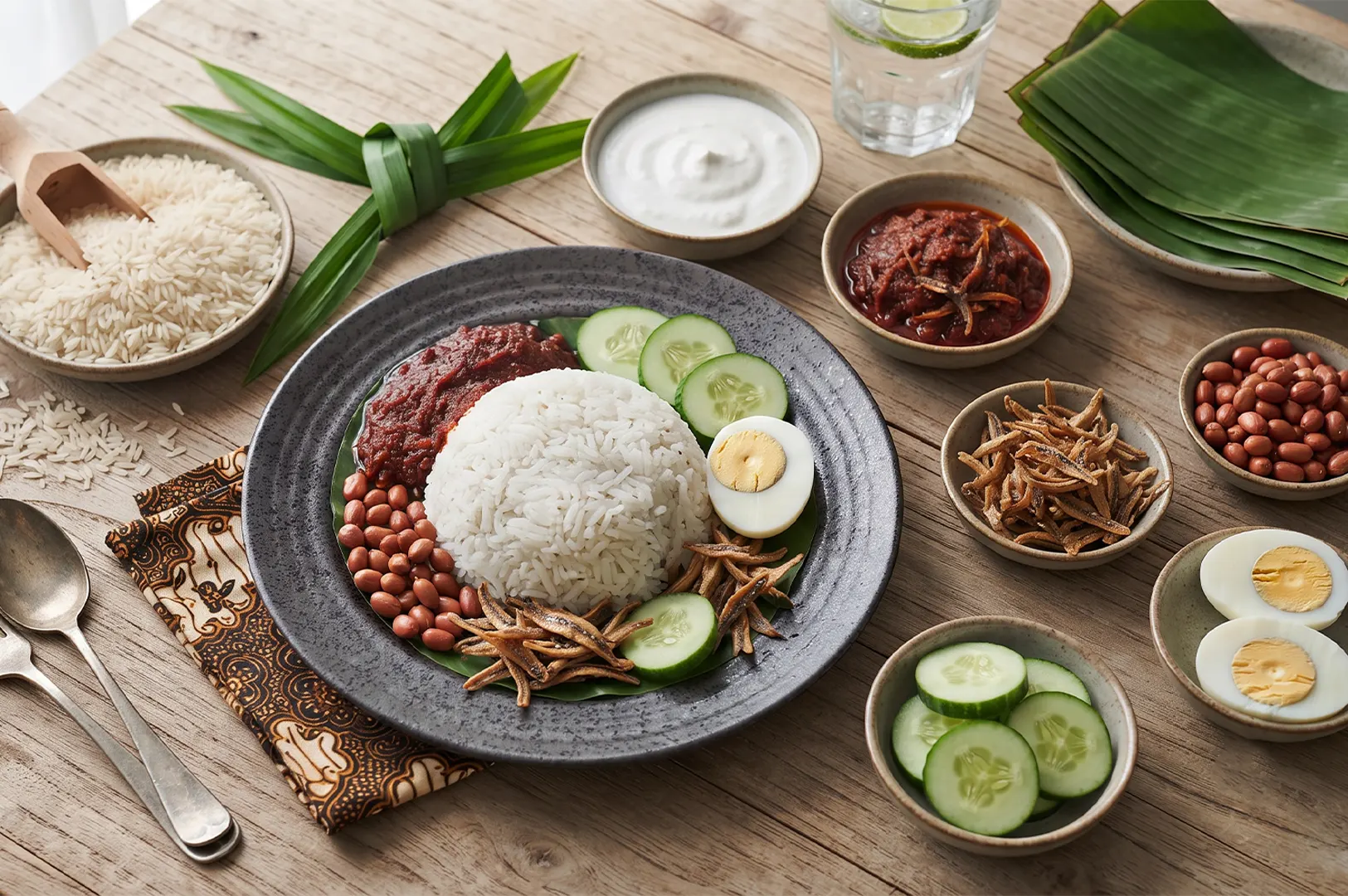
Here is the first thing that took me too long to understand: there is no single calorie number for nasi lemak.
Two plates from two different stalls can look almost identical and still be hundreds of calories apart. The reason is that nasi lemak is built from parts, and every part you add changes the total. The coconut rice is the base. Then come the toppings, and this is where things quietly get out of hand.
A basic packet with rice, sambal, ikan bilis, peanuts, a whole cucumber slice, and an egg is one thing. A full plate with a fried chicken wing, otah, rendang, and extra sambal is a completely different meal, even though we call both “nasi lemak.”
So when someone asks me “how many calories is nasi lemak,” my honest answer is: it depends entirely on how you order it. Portion size matters just as much as what you pick.
Nutritional Information: How Many Calories Are in a Basic Serving?

Let’s start with a real reference point rather than a guess.
HealthXchange, working with dietitians from KK Women’s and Children’s Hospital, lists a 210g serving of nasi lemak at 494 calories. That serving carries about 13g of protein, 14g of fat, 7.6g of saturated fat, 80g of carbohydrates, and 838mg of sodium.
So a basic serving sits around 500 calories. That’s a reasonable everyday breakfast if it’s your main meal and you keep the rest of the day lighter within your calorie budget.
But notice something in those numbers. The total fat doesn’t look alarming, yet the saturated fat is high (that’s the coconut milk and the fried bits doing their quiet work in the background). This is why I’ve stopped judging nasi lemak by calories alone. The macronutrients, especially the sodium and saturated fat, tell a fuller story.
Insider knowledge: A banana-leaf packet feels small in your hand, but coconut rice, peanuts, ikan bilis, and a fried egg are all calorie-dense. Size in your palm tells you nothing about nutrient amount. That was exactly the mistake I made in Ang Mo Kio.
Nasi Lemak vs. White Rice: Understanding the Calorie Difference
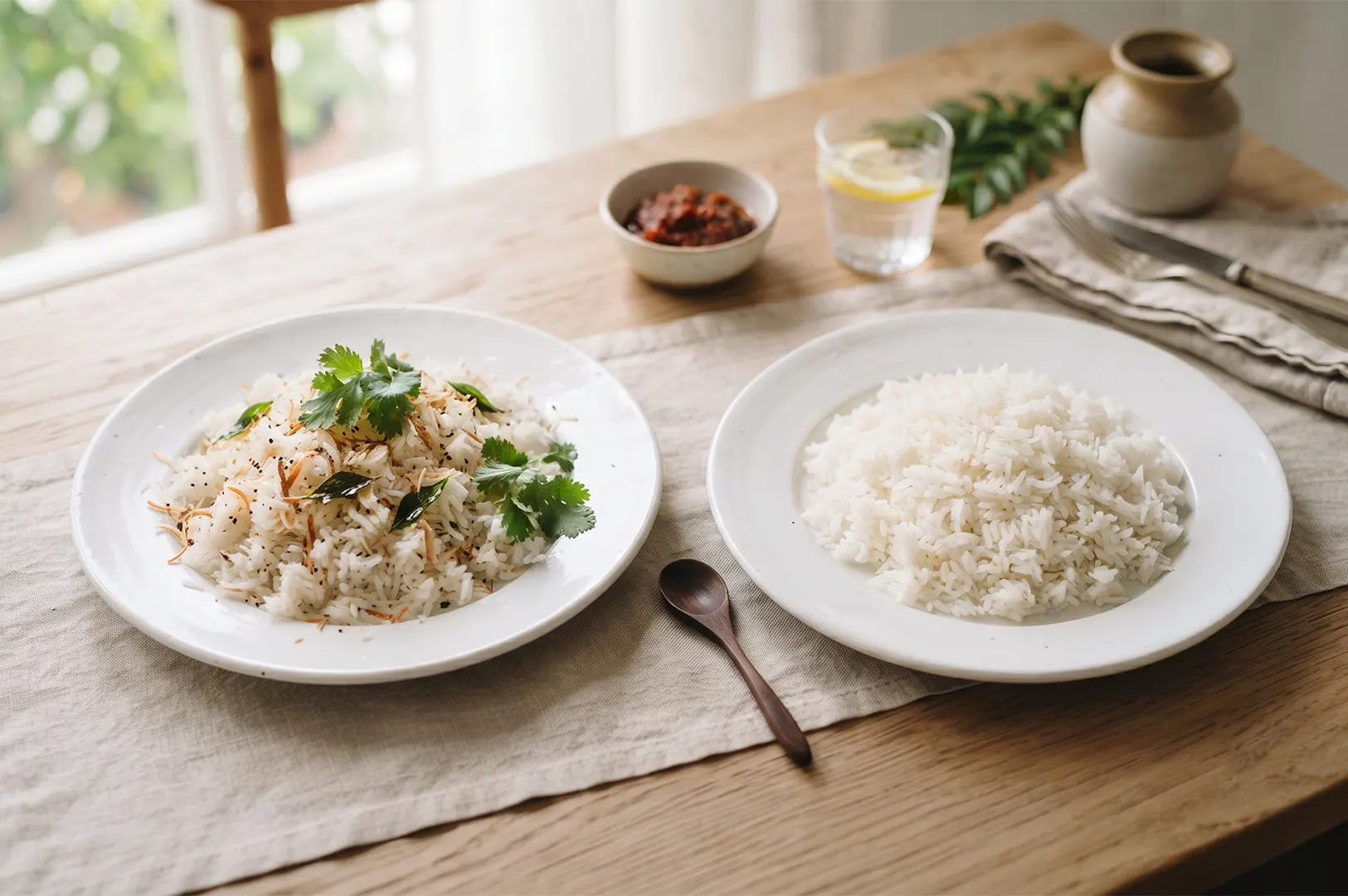
One question I get asked a lot is whether nasi lemak would be healthier if you just swapped the coconut rice for plain white rice.
Honestly, yes. Coconut rice is cooked with coconut milk, which means it carries more saturated fat and more calories per serving than plain white rice. A standard portion of coconut rice sits at roughly 280 to 350 calories. A comparable serving of plain white rice comes in closer to 180 to 200 calories. That gap adds up over regular consumption.
But here’s the nuance: swapping the rice alone doesn’t automatically make nasi lemak a low-calorie meal. The fried chicken, sambal, ikan bilis (anchovies), and peanuts are still doing their work. And plain rice without flavour isn’t exactly satisfying either. My take? Less coconut rice is more useful than no coconut rice.
Fried Chicken and Other Toppings: Where the Calories Really Add Up
This is the section I wish someone had shown me earlier. Based on NutriKaki’s 2026 breakdown, which cites HPB Singapore data, here’s roughly what each add-on brings to your daily intake:
Add-on | Estimated calories |
|---|---|
Coconut rice (standard portion) | 280 to 350 kcal |
Fried chicken wing | 220 to 280 kcal |
Rendang | 250 to 320 kcal |
Fried egg | 85 to 100 kcal |
Boiled eggs | 60 to 80 kcal |
Otah | 70 to 90 kcal |
Peanuts | 70 to 90 kcal |
Extra sambal (1 to 2 tbsp) | 30 to 55 kcal |
Look at that top row. Coconut rice is the single biggest contributor. That’s why “less rice” is honestly the most effective request you can make, more than skipping sambal or peanuts.
The fried chicken wing is the second big one. A standard set with coconut rice, egg, ikan bilis, peanuts, sambal, and cucumber lands around 500 to 570 calories. Add a wing and you’re looking at roughly 700 to 800. Two wings and extra sambal? You can push it to 900 to 1,000 calories, which is a full heavy meal by any measure.
I learned this the practical way. I used to order the double wing set out of habit, then feel sluggish by mid-morning and wonder why. It wasn’t the nasi lemak itself. It was the second wing.
Health Risks: Is Nasi Lemak Actually Unhealthy?
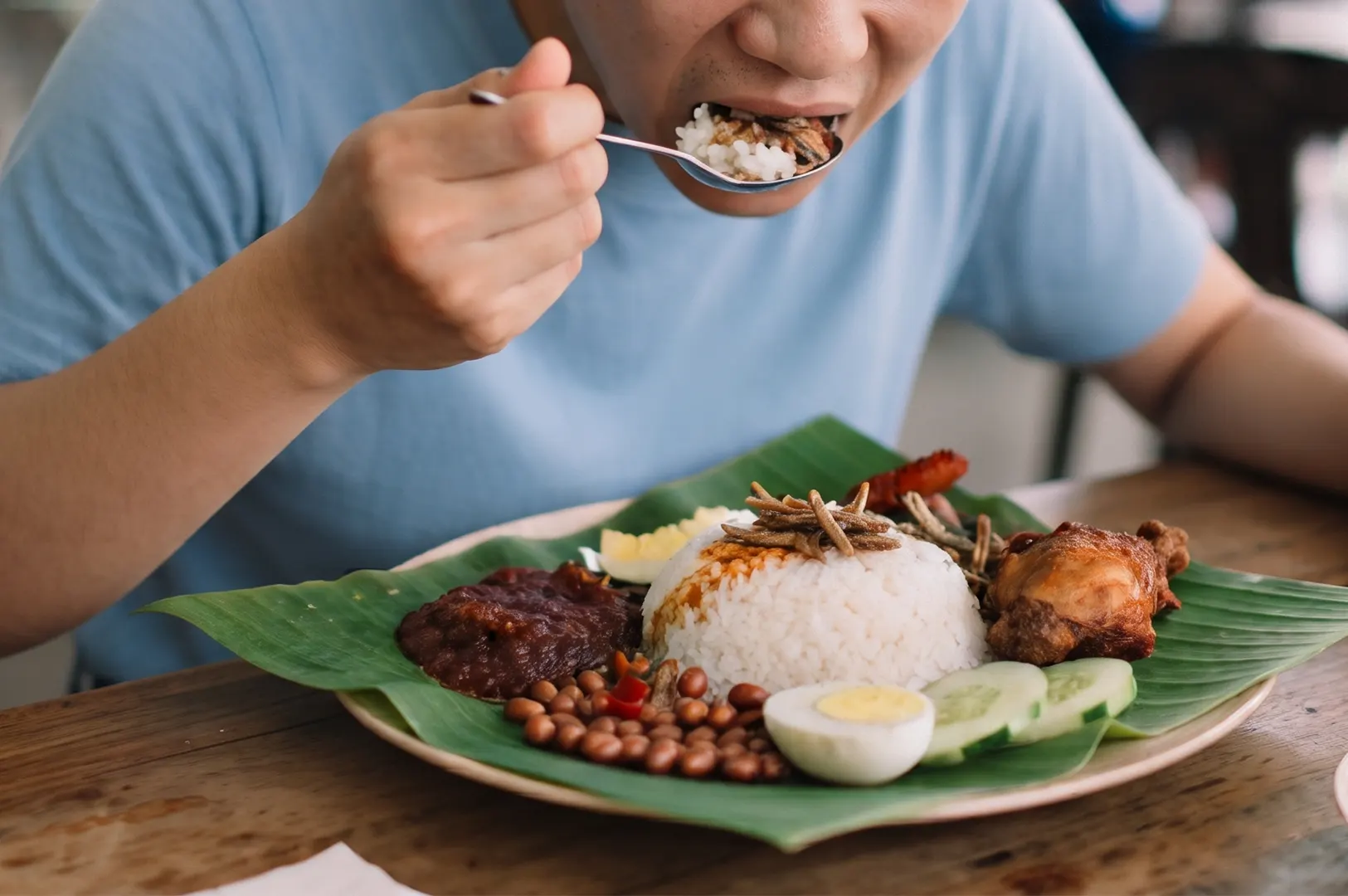
I want to be honest here, because I think a lot of food writing gets this wrong in both directions.
No, nasi lemak is not junk food. But it is energy-dense, and the real health risks aren’t just the calories. They’re the saturated fat and the sodium, both of which matter for long-term heart health.
HealthHub recommends keeping saturated fat under 10% of your daily calories. Regular consumption of high saturated fat foods has been linked to heart disease, and nasi lemak’s coconut milk base is one of the richer sources of saturated fat among local dishes. On sodium, the average adult in Singapore already eats around 9g of salt a day when the recommended amount is closer to 5g. Between the coconut rice, the ikan bilis, the sambal, and any fried protein, a nasi lemak plate can quietly push past both of those ceilings.
So the fairer way to describe it is this: nasi lemak is a dish to enjoy with awareness, not a dish to fear.
Here’s a misconception worth clearing up. People love to blame the fried chicken for everything. The chicken matters, yes, but the base already carries a lot before you add anything fried. Coconut milk rice, peanuts, and sambal are doing plenty of quiet work.
And one more: “it’s breakfast, so it must be light.” Timing doesn’t change the calorie content. A full plate at 8am is still 800 calories at 8am.
How Much Protein Does Nasi Lemak Actually Have?
This comes up often among readers who are trying to build a more balanced diet or track their macros.
A basic serving of nasi lemak (rice, sambal, ikan bilis, peanuts, and egg) carries around 13g of protein. That’s not bad, but it’s not a high-protein meal by itself. The protein mostly comes from the egg and the anchovies.
If you’re trying to increase your protein intake, adding a fried chicken wing brings another 15 to 20g of protein, though it also brings along the fat and sodium that come with deep-frying. A better option, in my experience, is to add boiled eggs or otah instead. Both add protein with a lighter calorie and fat load than fried chicken.
Peanuts also contribute some protein (around 3 to 4g per serving) along with healthy fats, though the portion size at most hawker stalls is already factored into the base calorie estimate.
So the honest answer to “how much protein does nasi lemak give you?” is: enough to start with, but not enough to skip other protein sources in your meals for the rest of the day.
Nasi Lemak and Weight Loss: What You Need to Know
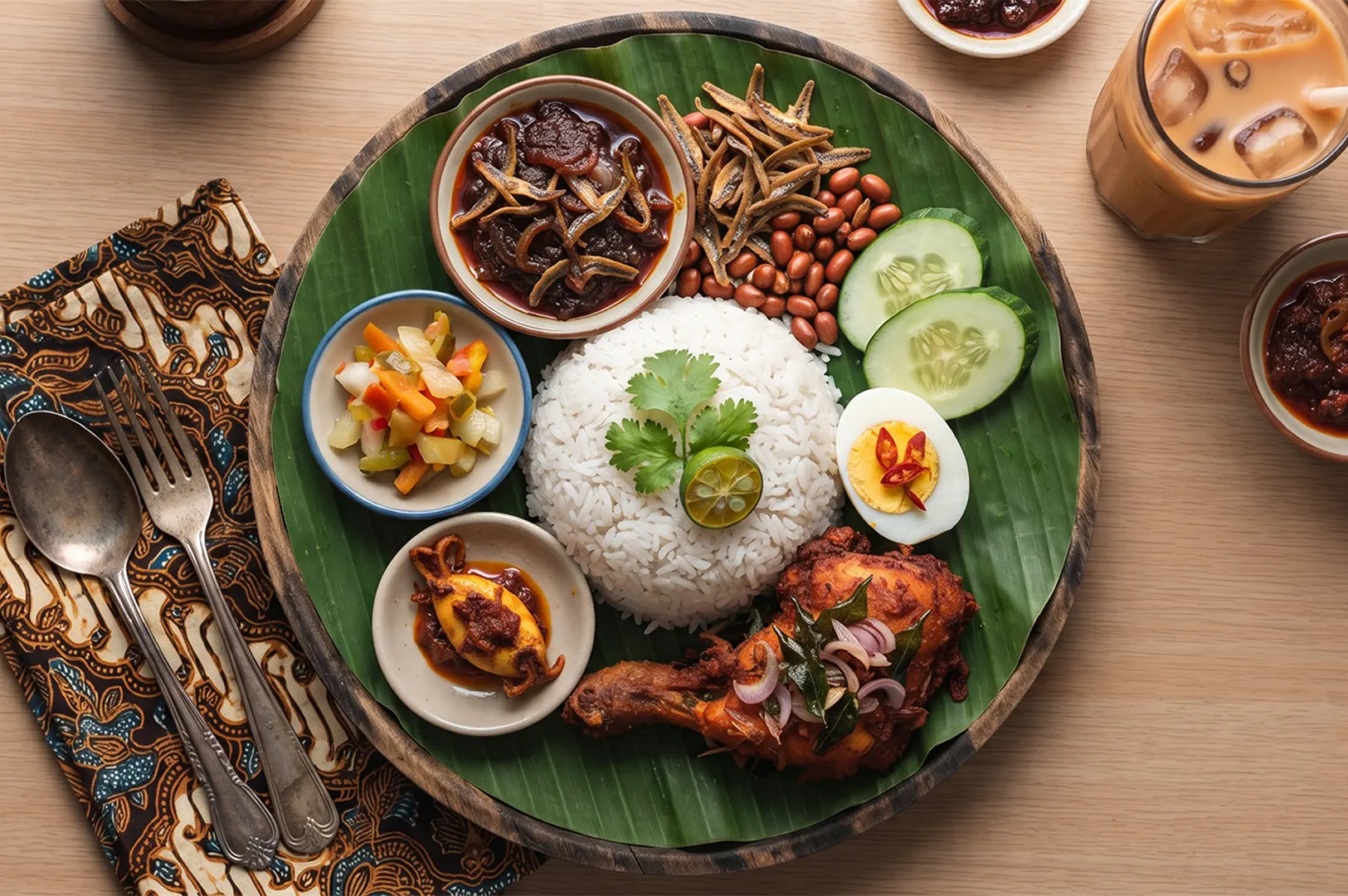
Let me be direct: you can eat nasi lemak and still manage your weight. I’ve done it. But you need to be honest about portion size and what’s piling up on the plate.
HealthHub lists average daily calorie needs at roughly 2,200 for men and 1,800 for women (though this varies with age, weight, height, and activity level). A 500-calorie nasi lemak sits comfortably within that. A 900-calorie version takes up nearly half your daily intake in one meal, which leaves very little room for lunch and dinner if weight loss is your goal.
For a weight loss diet, I’d suggest treating nasi lemak as your main meal rather than a quick breakfast add-on. Order it at lunch, eat it slowly, and go lighter for dinner. Soup-based dishes or meals with plenty of vegetables balance the rest of the day well.
The simpler way I frame it is this: if nasi lemak is a frequent part of your week, manage the toppings. If it’s an occasional treat, enjoy it fully without guilt.
Gaining Weight? Nasi Lemak Can Work for That Too
On the other side of the conversation are readers who are underweight or going through intense exercise training and actually need more calories.
For that group, nasi lemak is genuinely a solid option. A full plate with coconut rice, a fried chicken wing, egg, peanuts, and sambal provides a mix of carbohydrates, fats, and protein that supports energy and recovery. The calorie density of coconut milk rice means you’re getting meaningful fuel without needing to eat a massive volume of food.
If gaining weight is your goal, I wouldn’t shy away from the fried chicken or the peanuts. Both provide calories and nutrients in a package that’s actually enjoyable. The caution here is still sodium. Too much salt content over time is a risk regardless of your weight goal, so even when eating for a calorie surplus, rotating in lighter nasi lemak days makes sense.
Nasi Lemak Without the Guilt: How to Order a Healthier Version
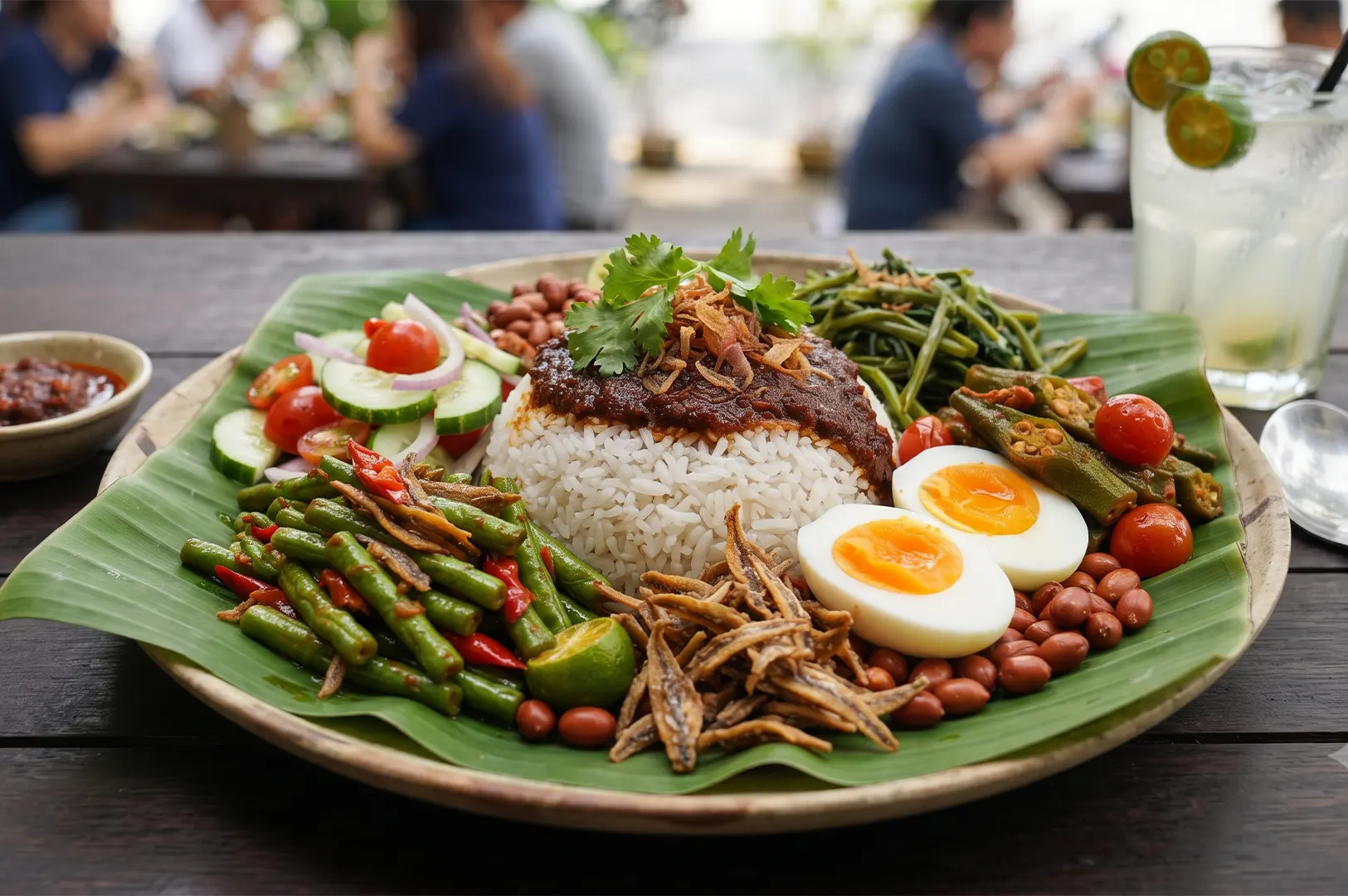
This is where you actually take back control, and the good news is it costs nothing extra.
Over the years I’ve settled into a few simple requests that make a real difference to the nutritional value of my meal:
Ask for less rice. This is the biggest lever. Coconut rice is the main calorie base, and a smaller portion makes a meaningful difference.
Swap fried chicken for boiled eggs or otah. You still get protein and flavour, but with less saturated fat.
Add bean sprouts or extra vegetables if available. Most stalls won’t mind, and it improves the balance of carbs, protein, and vegetables on your plate.
Go easy on sambal. Less sambal means less sodium and less sugar in one move.
Skip the sweet drink. Kopi-o kosong or plain water instead of teh or a canned drink cuts unnecessary sugar from your meal without touching the food.
Ask for a whole cucumber rather than a token slice. It adds fibre and helps with appetite and satiety.
My go-to phrase at most stalls is simple: “less rice, less sambal, one chicken wing only.” It’s understood almost everywhere and nobody bats an eye.
Pro tip: If you enjoy jogging or walking at a moderate pace, a 500-calorie nasi lemak breakfast burns off in roughly 50 to 60 minutes of steady movement. That’s not a reason to eat it every day without thinking, but it’s a useful perspective on how nasi lemak fits into an active lifestyle rather than working against it.
If you’re looking for more places that make healthy eating easier, whether it’s healthier takes on local favourites or vegan-friendly restaurants, check out our guide to vegetarian dining in Singapore: https://healthyfoodguide.com.sg/vegetarian-dining-singapore/
Daily Intake and Timing: When Should You Eat Nasi Lemak?
You can eat nasi lemak any time. What matters is how the rest of your day looks.
Breakfast: Go for a basic set or a lighter protein choice, especially if you’re sitting at a desk all day. Boiled eggs over fried chicken, less rice, easy on the sambal.
Lunch: This is honestly the best slot for a full plate. It’s your main meal, your body is active, and you have the rest of the day to balance it out.
Dinner: Keep the portion lighter if lunch was already heavy. A simple recipe of rice, egg, cucumber, and sambal without fried protein is nutritious and not too heavy before rest.
Supper: I’d skip the full works here if you’re watching your weight, your digestion, or your sleep quality.
HealthHub also notes that what you eat around your main meal matters. If nasi lemak is a frequent part of your week, make sure your other meals include plenty of vegetables, soup, and lean proteins to balance the macronutrients out.
Pro tip: HPB’s Healthy 365 app has a Meal Log tool with Singapore local dishes built in. Logging your nasi lemak order a few times is a genuinely useful exercise. It teaches you what a “normal” portion actually costs in your calorie budget, and after that, you carry the instinct with you without needing to track every day.
Final Verdict: Eat Nasi Lemak with Intention, Not Guilt

Here is where I’ve landed after years of eating this dish (and getting it wrong plenty of times).
Nasi lemak can be part of a healthy, balanced diet. A basic plate sits around 500 calories, delivers decent macronutrients, and is genuinely nutritious when eaten in moderation. It only becomes a problem when the add-ons stack up: two fried chicken wings, rendang, extra coconut rice, a mound of sambal, and a sweet drink on the side. At that point you’re not eating nasi lemak, you’re eating three dishes at once.
So eat nasi lemak. Eat it as one of your favourite foods, because it deserves to be. Just order it with a little thought. Less rice. One protein. Easy on the sambal. Water or kopi-o kosong instead of teh. That’s genuinely all it takes to keep the flavour and reduce the health risks.
I still think about that oily banana-leaf packet in Ang Mo Kio. I eat nasi lemak differently now, but I love it just the same. Understanding the calories just means you get to keep coming back for it.
If this guide was useful to you, have a look through Healthy Food Guide for more honest write-ups on the dishes we grew up eating. There’s plenty more worth your time over there.