
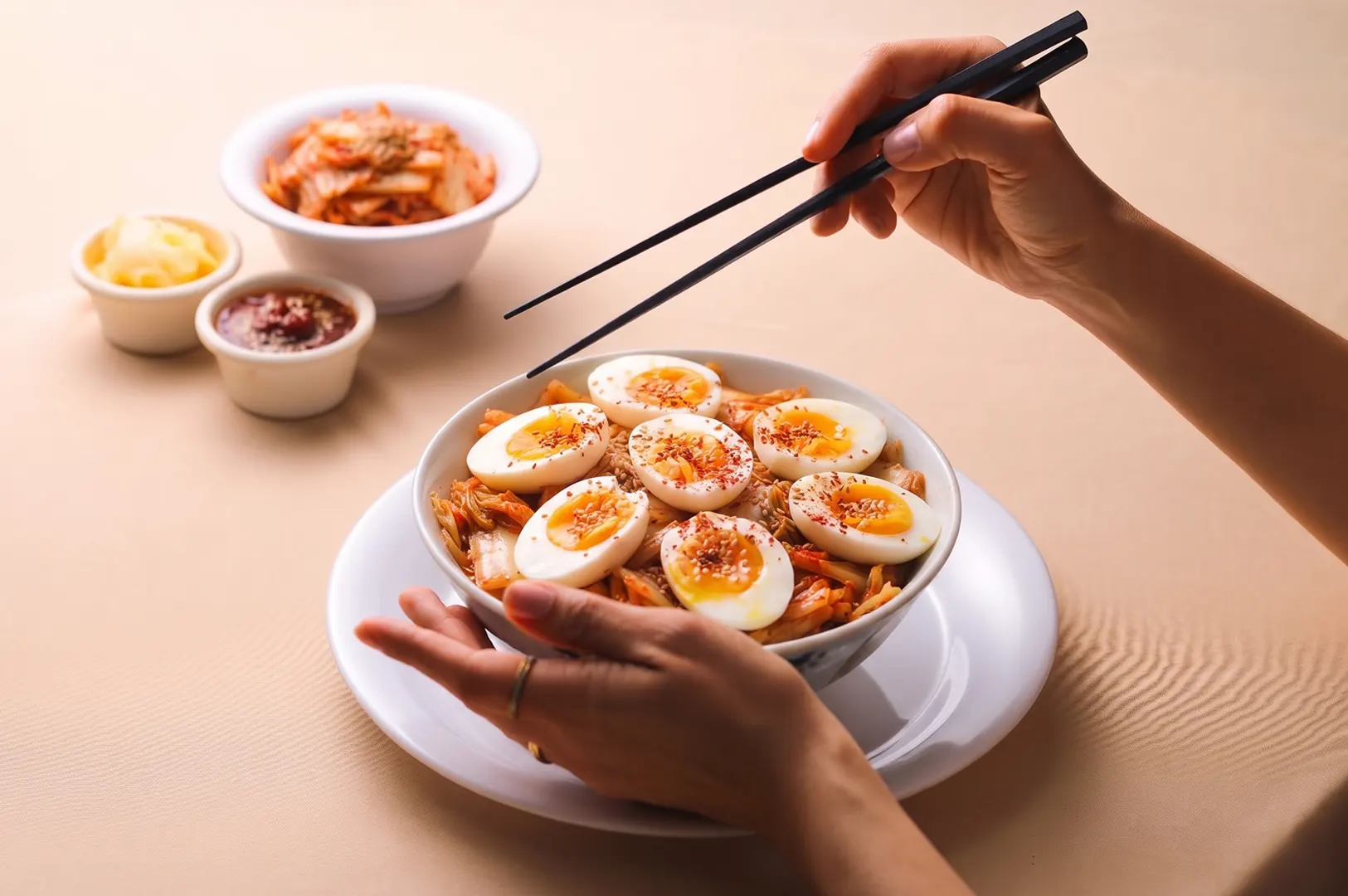
My TikTok feed has recently decided that I need to know about boiled eggs and kimchi.
The combination is simple: peel a couple of boiled eggs, pile kimchi on top, add pepper or chilli, and apparently breakfast is sorted. Some versions add olive oil or nori. What caught my attention, though, was not the recipe. It was creators calling it a “natural Ozempic.”
That is where I think TikTok gets ahead of itself.
As a meal, eggs and kimchi actually have plenty going for them. Eggs provide protein along with nutrients such as choline, vitamin A and biotin. Protein can also help make a meal more satisfying, which probably explains part of the appeal of eating eggs first thing in the morning.
Kimchi brings something completely different. It is made from fermented vegetables, usually cabbage or radish, and fermentation involves lactic acid bacteria. It also provides vegetables, fibre and various compounds produced during fermentation. Research into kimchi is promising, particularly around cardiometabolic health, although the human evidence is still much smaller than social media sometimes suggests.
Put the two together and I can understand why people like it. The eggs are rich and filling; the kimchi is sour, spicy and crunchy. It is quick, requires almost no cooking, and tastes far more interesting than two plain boiled eggs.
But is it a “natural Ozempic”? No.
Ozempic and other semaglutide medicines act on GLP-1 receptors and affect appetite, calorie intake, blood sugar regulation and gastric emptying. Eating eggs and kimchi does not reproduce that pharmacological effect. A meal can help me feel full without becoming the food equivalent of a prescription medication.
There are a few other things I would keep in mind. Kimchi can be quite high in sodium because salt is an important part of the fermentation process. That does not mean I need to avoid it, but piling half a jar onto every meal is probably unnecessary, particularly if the rest of my diet is already salty.
I would also treat eggs and kimchi as a starting point rather than some perfect standalone meal. If I am genuinely hungry, I might add wholegrain toast, rice, fruit or vegetables. That gives me more energy and makes breakfast feel less like a viral hack and more like an actual meal.
That is probably my main takeaway from this trend. Eggs and kimchi do not need an Ozempic comparison to be worth eating.
They already make a convenient, protein-rich, flavourful combination. For me, that is a much better reason to keep them on the breakfast rotation than any promise of a miracle weight-loss shortcut.
For more sensible takes on viral food trends and everyday healthy eating, visit Healthy Food Guide.