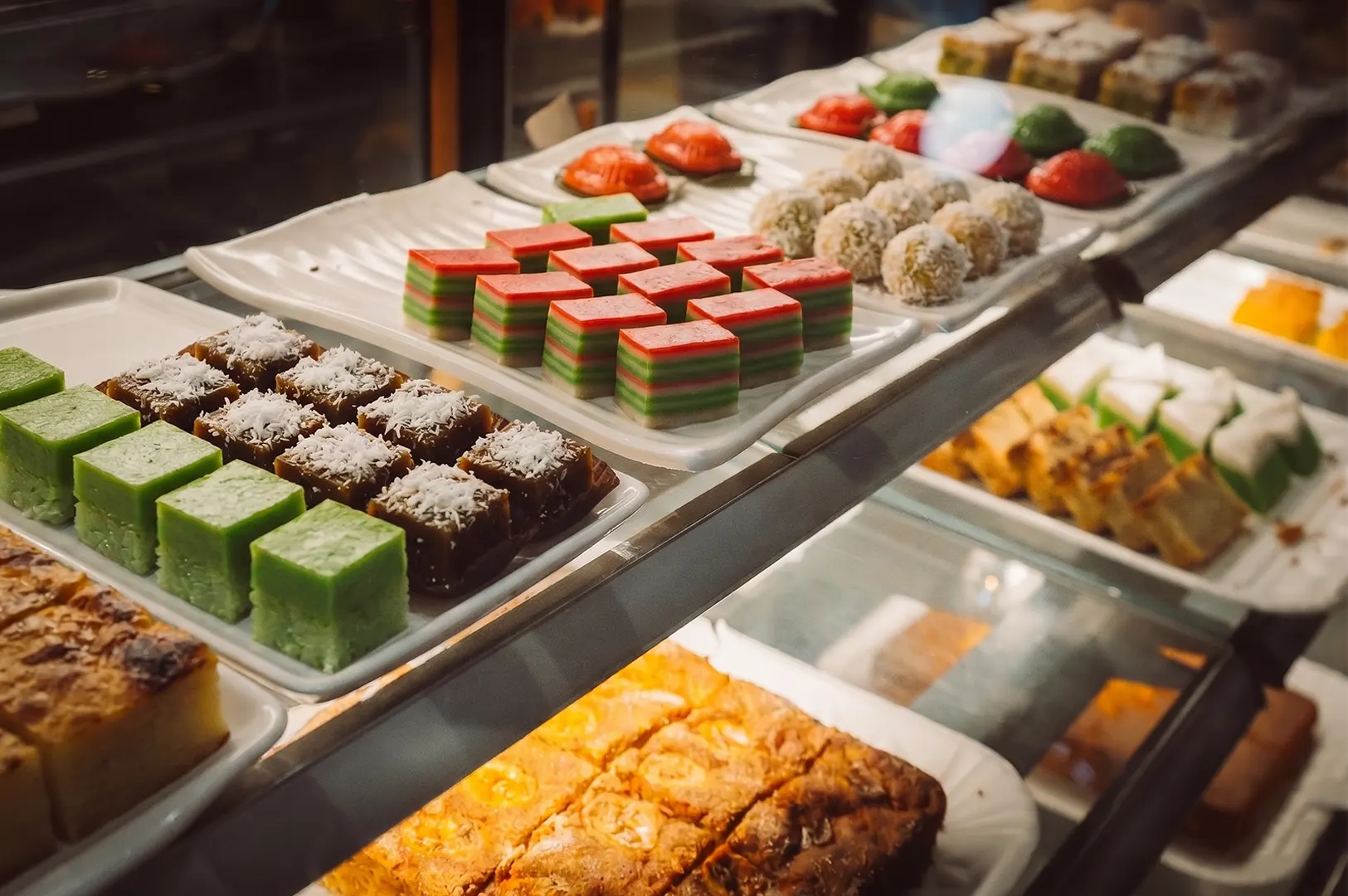
On a humid Saturday morning in Singapore, few sights feel as comforting as an old-school kueh counter glowing with color. The trays are usually packed close together: glossy green Kueh Talam, jewel-like Ang Ku Kueh, soft squares of Kueh Bingka Ubi, and layers of Kueh Lapis stacked like edible nostalgia. There is the smell of pandan leaves, coconut milk, steamed glutinous rice, and kopi nearby. Someone is buying a box for the family. Someone else is choosing “just one piece” before work. We know that feeling well.
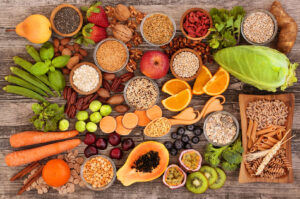
Healthy snacking is often framed as raw almonds, protein bars, celery sticks, or something you eat because you are trying very hard to be “good.” But in Singapore, food is never only fuel. It is memory, culture, pleasure, and community. That is why we think kueh deserves a softer, more thoughtful place in the healthy snacks Singapore conversation.
What “Kueh” Really Means in Singapore: A World of Traditional Kuih and Nonya Kueh
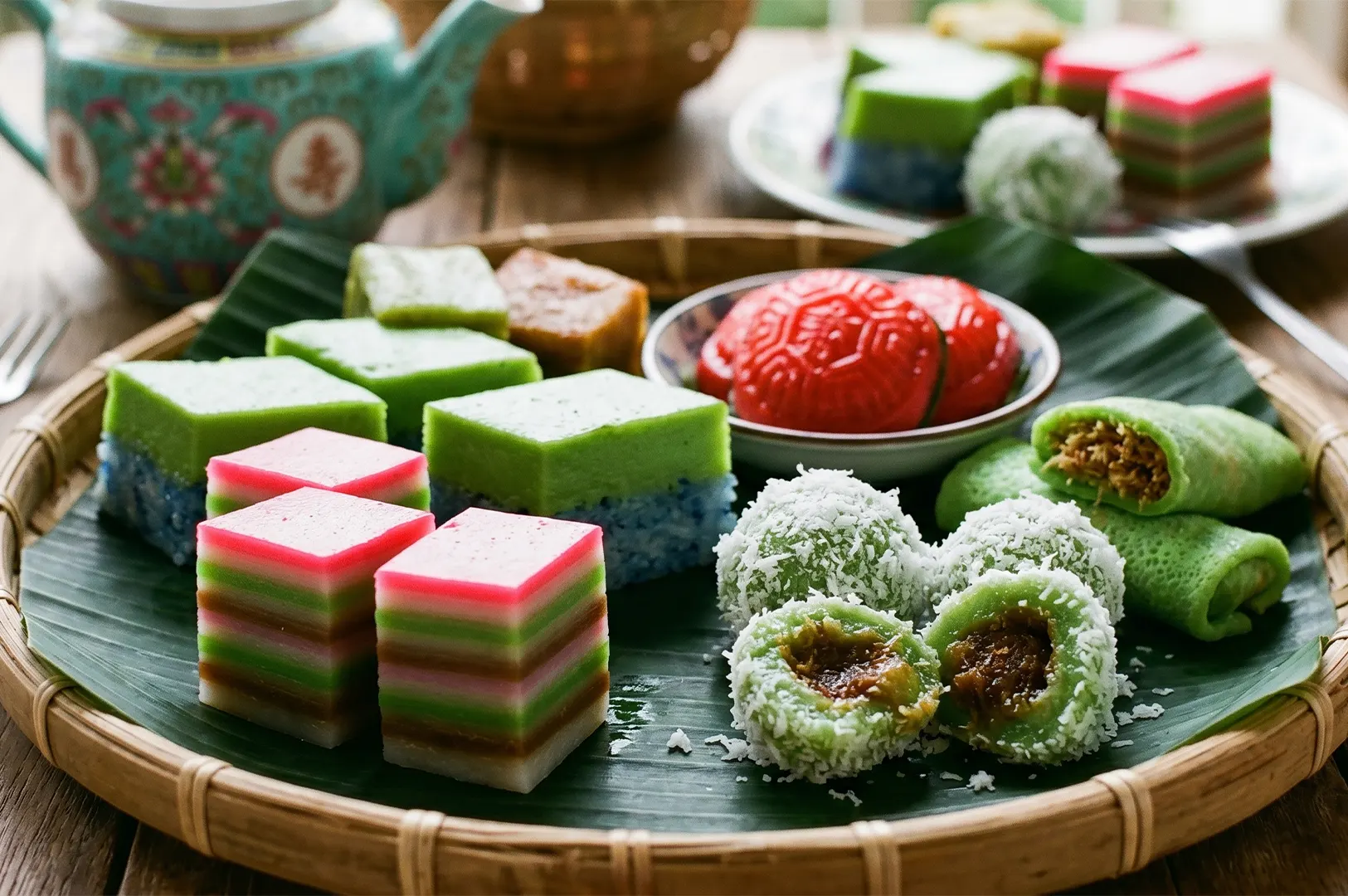
Kueh in Southeast Asia is like a whole universe of texture, color, technique, and heritage all rolled into one. Some kueh are soft and steamed, these are called kueh basah and are usually made with rice flour, glutinous rice, and tapioca flour. Then there are the drier, crispier, baked ones, known as kueh kering, like the delicate kueh bahulu cakes.
And let’s not forget the beloved Nonya kueh, a special kind that really shows off the Peranakan community’s amazing culinary skills, blending coconut cream, pandan leaves, and gula melaka to create vibrant, fragrant desserts.
This variety is part of the magic. Kueh can be chewy glutinous rice or soft and moist, layered like the famous nine layer cake known as kueh lapis. It can be eaten with kopi in the morning, served at family gatherings, wrapped in banana leaves for freshness, or offered during celebrations.
What makes kueh feel comforting is not only the sweetness but the ritual. The smallness of each bite, the chewy texture of ang ku kueh’s glutinous rice skin, and the fragrant pandan and coconut cream flavors can instantly take us back to childhood. In a food culture that moves fast, kueh invites us to pause and savor all the right notes.
Is Kueh Healthy? The Honest Nutrition Answer on Traditional Kueh and Natural Ingredients
Here is the balanced truth: it depends.
Most kueh are carbohydrate-based, often made with rice flour, glutinous rice, and tapioca flour. Many include coconut milk or grated coconut, which gives richness and satisfaction but also adds saturated fat and calories. Sweetness often comes from sugar or palm sugar such as gula melaka, or sweet fillings like kaya. Some versions may also contain more sodium than expected, especially if savoury fillings like dried shrimp are involved.
So yes, kueh can be energy-dense. It can raise blood sugar quickly if it is mainly refined starch and sugar, especially when eaten alone on an empty stomach. If we eat several pieces while chatting or scrolling, the calories can add up before we notice.
But that is not the whole story.
Some kueh offer useful nutritional qualities. Mung bean or sweet fillings add plant-based protein and fiber. Sweet potato, yam, tapioca, and cassava provide satisfying texture and energy. Many steamed glutinous rice kueh are not deep-fried, making them lighter choices compared with fried pastries. Some kueh may be naturally gluten-free depending on the recipe, though anyone with gluten sensitivity should check ingredients carefully.
When we say “healthier,” we mean practical things: lower added sugar, more fiber, more satiety, less deep-frying, smaller portions, and natural ingredients we recognize. We also mean a snack that satisfies emotionally, because a snack that leaves us feeling deprived rarely supports long-term balance.
The Healthier Traits to Look For in Kueh: From Kueh Dadar to Kueh Salat
We do not need to turn kueh into diet food to enjoy it wisely. We just need to notice what makes one choice more supportive than another.
When choosing kueh, these cues help:
Steamed or baked more often than deep-fried: Steamed kueh like kueh lapis or kueh salat can still be rich but avoid extra oil from frying. Kuih keria, a fried sweet potato doughnut coated in palm sugar, is delicious but more indulgent.
Less added sugar or syrup: Look for versions that taste fragrant, not overwhelmingly sweet. Kueh salat’s kaya custard layer balances sweetness with coconut cream richness.
Legume or tuber-based fillings: Sweet fillings like mung bean paste or palm sugar kaya provide more body and satisfaction.
Portion-friendly pieces: A small piece enjoyed slowly can feel more satisfying than a large portion eaten quickly.
Freshly made with recognizable natural ingredients: Fresh kueh from trusted local makers often feels more satisfying than heavily processed packaged sweets.
Paired with unsweetened drinks: Kopi o kosong, plain tea, or unsweetened soy milk can keep the snack from becoming too sugar-heavy.
Mindful snacking becomes empowering rather than restrictive. We are not asking, “How do I remove joy?” We are asking, “How do I make this joy work better for my body?”
The Kueh That Can Fit a Smarter Snack Moment: Featuring Ang Ku Kueh and Kueh Salat
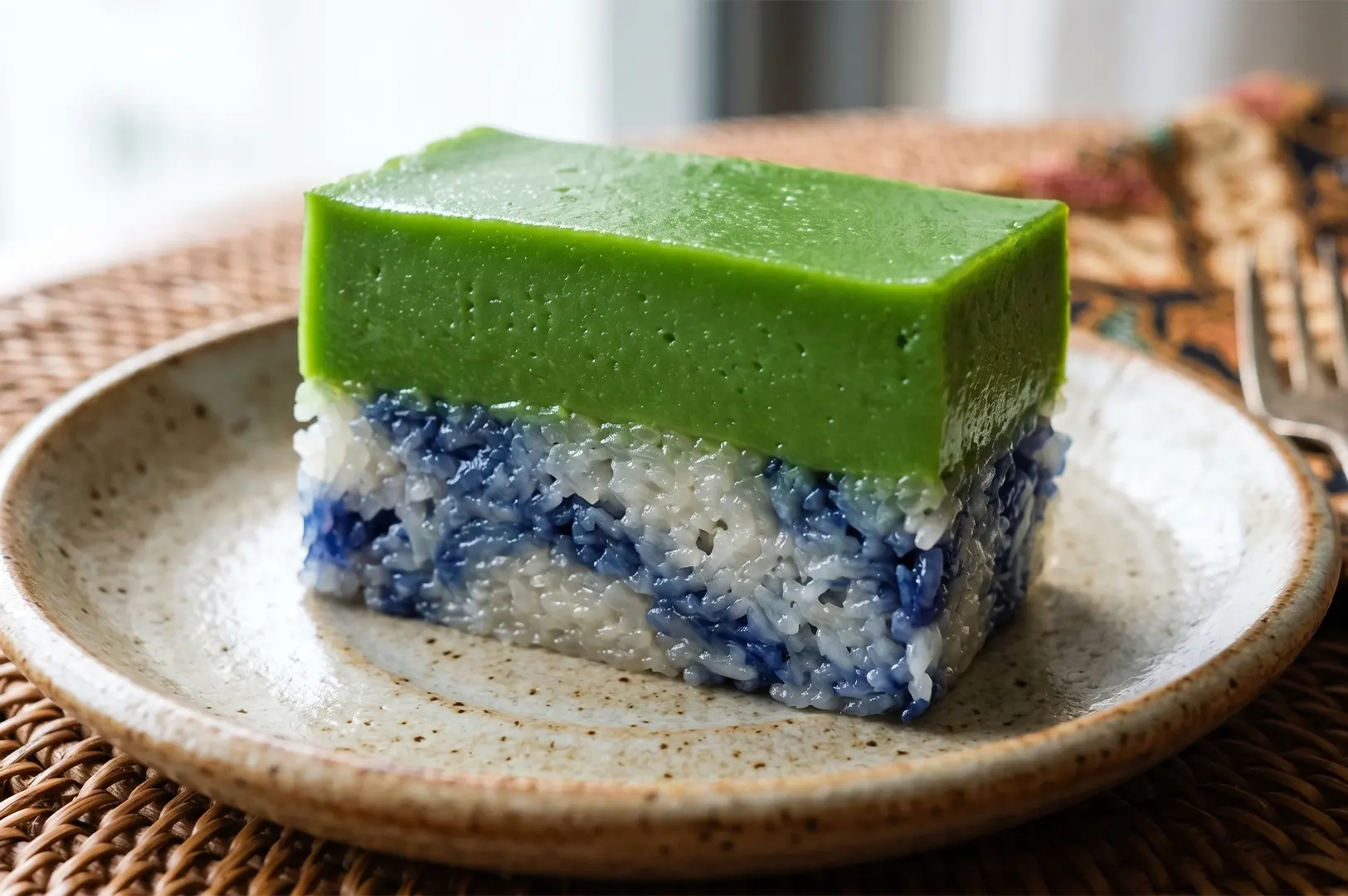
Kueh Talam is one of those pieces we love for its contrast: a green pandan leaves layer with a soft, slightly sweet bottom layer made of steamed glutinous rice, topped by a creamy coconut cream layer that gives a little saltiness and richness. It is satisfying because it has flavor depth. The trick is portion awareness. One neat square with tea can feel complete.
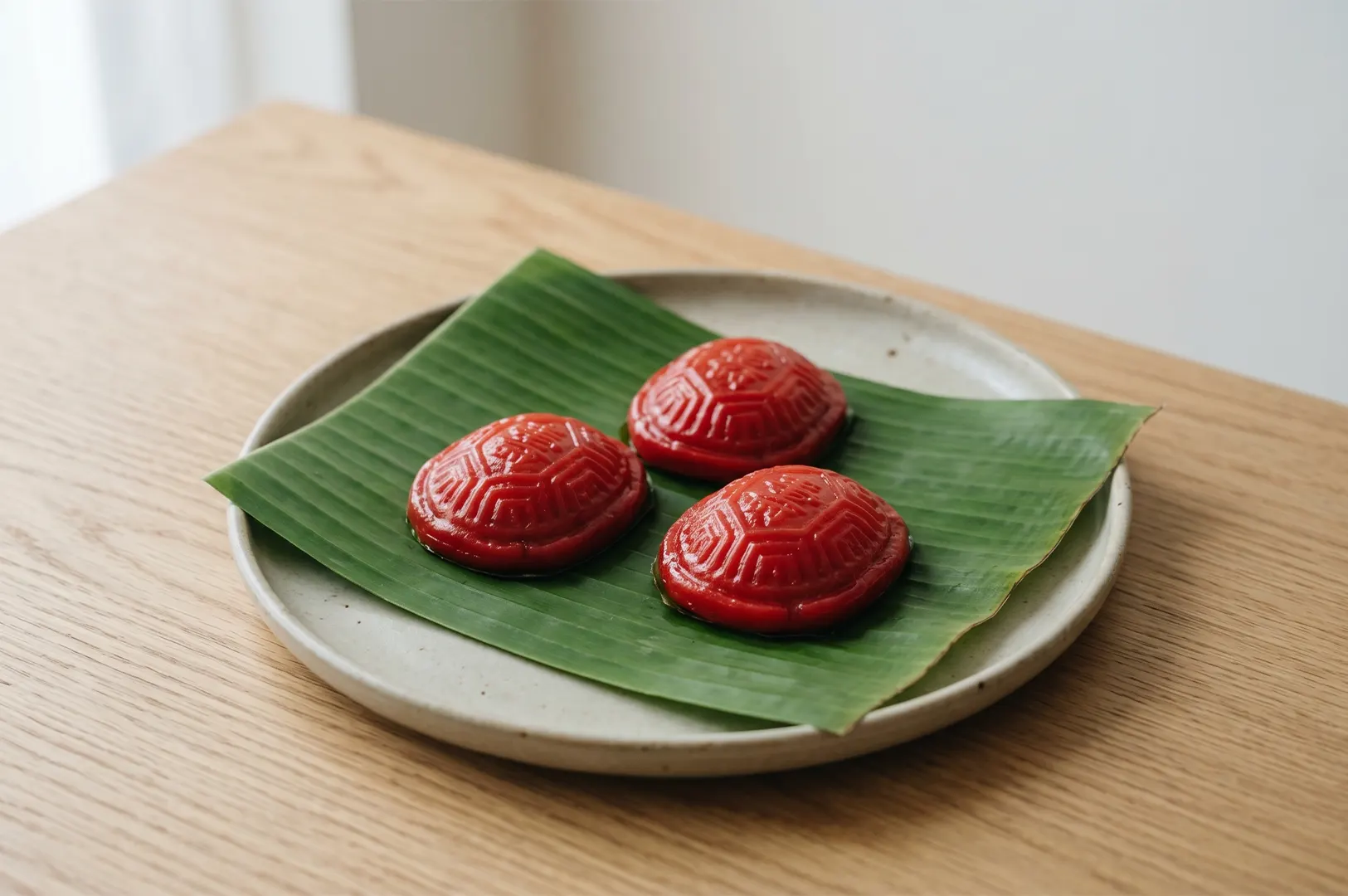
Ang Ku Kueh brings a different kind of pleasure. The chewy glutinous rice skin, often shaped like a tortoise and made with glutinous rice flour, wraps around a sweet filling of mung bean or palm sugar kaya. The mung bean version can feel especially satisfying because it has a dense, filling center. It is still a sweet snack, but not just empty sweetness. When enjoyed slowly, the chew alone encourages a more mindful pace.
Kueh Kosui is another beautiful example of traditional kuih that feels small but indulgent. Its soft, wobbly texture, pandan aroma, and grated coconut coating make it deeply appealing. Because it often contains palm sugar or gula melaka, sweetness is part of its charm. We like to treat it as a mindful sweet bite, not something to eat by the tray.
Ondeh Ondeh is pure drama in the best way. That burst of gula melaka palm sugar syrup is joyful, fragrant, and unmistakably Singaporean. From a nutrition lens, it is best understood as a treat. A couple of pieces bring huge satisfaction because the flavor is so intense. Sometimes a small, deeply pleasurable snack prevents restless grazing on less fulfilling foods.
Kueh Lapis, the iconic nine layer cake, is rich, colorful, and nostalgic. Made with a mixture of rice flour, tapioca flour, coconut milk, eggs, and sugar, it is painstakingly steamed layer by layer to achieve its thick, moist consistency. It is easy to peel layer after layer and suddenly realize the whole block is gone. We like thinking of it as “a few layers” rather than a whole slab. That simple mental shift preserves the fun while keeping the portion sensible.
How We Make Kueh Work as a Healthy Snack: Tradition Meets Modern Taste
In real life, we make kueh work best when we stop treating it as either forbidden or free-flow. We enjoy it as part of a snack moment.
If having kueh in the morning, one piece of ang ku kueh paired with unsweetened soy milk adds extra protein. After lunch, a small kueh dadar, a rolled pandan crepe filled with sweet grated coconut and palm sugar, with hot tea can replace sugary drinks. When buying for family, cutting richer pieces smaller allows everyone variety without overdoing it.
Pairing matters because protein and fiber improve satiety and may soften the glycemic impact of sweet, starch-based snacks. Greek yogurt, eggs, nuts, soy milk, or fiber-rich fruit help make kueh feel more balanced. It is not about making the snack perfect but making it work harder for energy and satisfaction.
The Modern Kueh Revival: Michelin Guide Recognition and Fresh Takes on Traditional Kueh
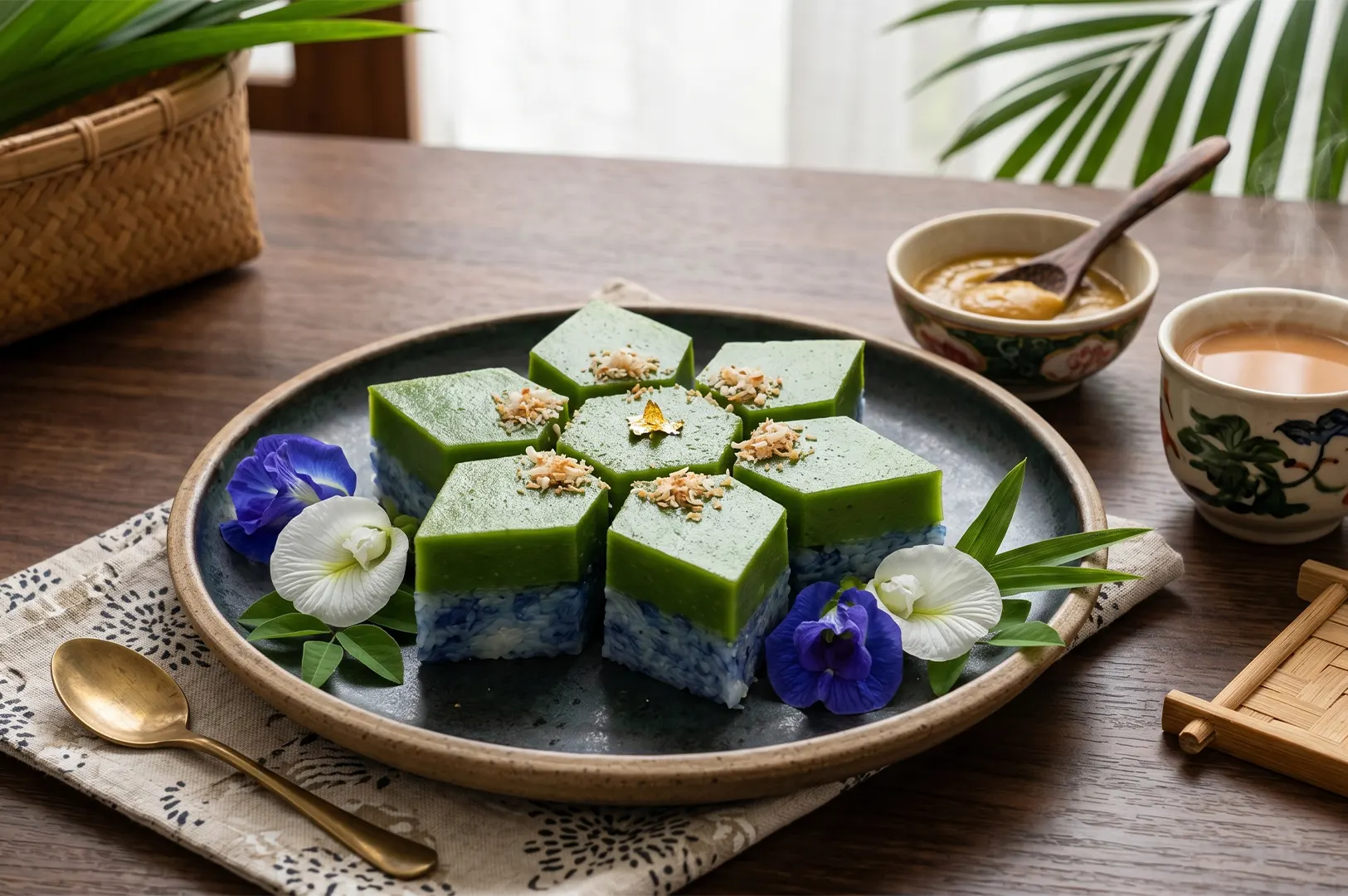
One of the most exciting things happening in Singapore and Kuala Lumpur is the modern kueh revival. Local makers respect tradition while gently adapting to modern tastes. Some use less refined sugar, natural coloring from pandan or blue pea flower, better-quality coconut cream, smaller portions, and more thoughtful packaging. Others offer low sugar kueh options that still honor the soul of the original recipes.
This revival includes celebrated spots like Tiong Bahru Galicier Pastry, a heritage bakery recognized in the Michelin Guide Singapore 2023, known for kueh salat with smooth pandan custard and savoury steamed glutinous rice bottom layer. These places create kueh with all the right notes, fragrant, chewy, thick, and moist, using natural ingredients that honor tradition.
A Softer Way to Snack: Embracing Kueh’s Chewy Texture and Tradition
Kueh is not the enemy of healthy eating. Mindless eating, oversized portions, and turning every sweet snack into a daily habit without awareness are the real issues. Kueh, enjoyed with intention, can be part of a balanced snack pattern that celebrates culture, flavor, and nourishment.
So the next time you pass an old-school kueh counter, do not feel like you must choose between wellness and tradition. Choose one piece you truly love. Pair it with an unsweetened drink. Notice the texture, the chewy glutinous rice, the fragrant pandan leaves, the richness of coconut milk, and the sweetness of gula melaka. Support a local maker who cares about craft. Let your snack be joyful, balanced, and beautifully Singaporean.
Healthy eating does not have to be hard-edged. Sometimes, it can be soft, chewy glutinous rice, coconut-scented, and wrapped in banana leaf.
For a currated list of healthy restaurants with diverse flavour without sacrificing health related background, A Healthier Way to Taste Heritage: Peranakan Food Singapore Reimagined is a must read!