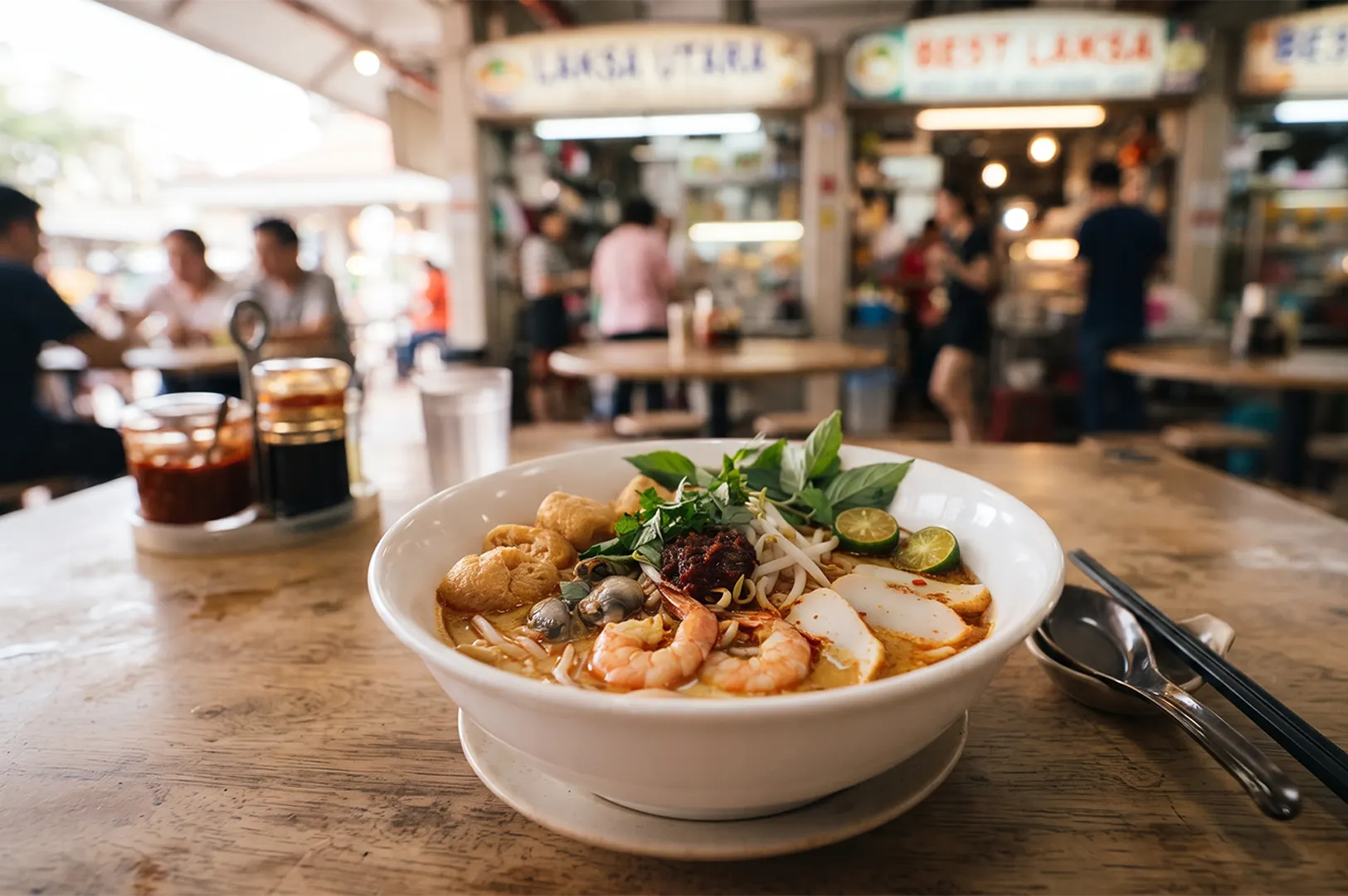
The first time I really thought about calories in laksa, I was three spoonfuls deep at a hawker centre, sweat on my brow, the fan clacking somewhere behind me. Orange curry broth clinging to the noodles. A tau pok soaked through and dripping. I wasn’t counting anything. I was just happy.
Then a friend across the table asked, half-joking, “You know how many calories in that, right?“
I didn’t. So I went and found out. And what I learned changed how I eat laksa, without ever making me give it up.
Let me walk you through it, friend to friend.
How Many Calories in Laksa Are We Actually Talking About?
Here’s the short answer: a typical Singapore laksa lands somewhere around 550 to 650 calories a bowl. Local food composition data often points to roughly 569 kcal for a standard serving.
But I want to be honest with you. That calorie content is an estimate, not gospel. Two bowls that look almost identical can differ a lot, depending on how much coconut milk the auntie ladles in, the size of the rice noodle portion, and how many tau pok are hiding at the bottom.
Here’s a working guide I keep in my head:
Laksa serving | Estimated calories |
|---|---|
Small or reduced-noodle bowl | 400–500 kcal |
Standard hawker bowl | 550–650 kcal |
Large bowl, rich gravy, extra ingredients | 700–900+ kcal |
Standard laksa with a sweet drink | 650–850+ kcal |
Notice where the biggest jumps come from. It’s the gravy and the portion size, not the shrimp or cockles. | |
The Nutritional Value of Singapore Laksa: What You're Actually Eating
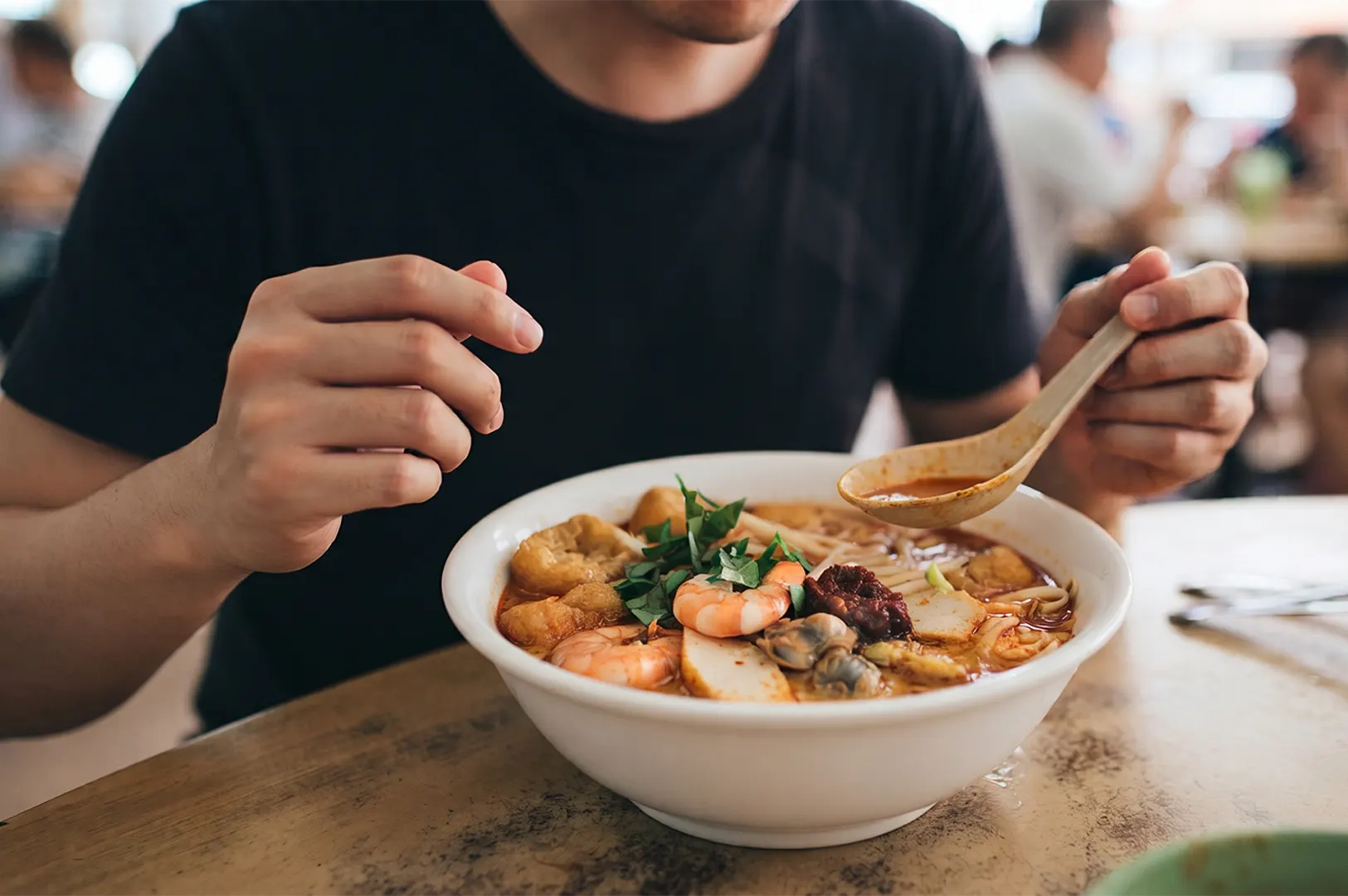
Before we talk about managing calories, it helps to understand the macronutrients in this dish. Singapore laksa is not just fat and carbs. A standard bowl offers a real spread across all key macronutrients.
Protein comes from shrimp, cockles, fish cake, egg, and tofu. Carbohydrates come mainly from the rice noodles and any sugar in the laksa paste. Fat, particularly high saturated fat, comes from the coconut milk and the oil used to fry the rempah. You also get small amounts of fibre from bean sprouts and spices, though not nearly enough to call this a high-fibre dish.
The nutritional value of a bowl depends heavily on its ingredients and portion size. A carefully assembled bowl with generous shrimp, a modest noodle portion, and a lighter broth offers real protein and flavour. A bowl piled with tau pok, extra noodles, and a thick coconut milk base tips the balance toward high saturated fat and calories fast.
One thing laksa does not offer much of: vegetables. Bean sprouts and a few herbs are not enough to meet your daily needs. Keep that in mind when building the rest of your meals for the day, and aim to rest of the nutritional gaps with fibre-rich ingredients at other mealtimes.
Why Rice Noodles and Coconut Milk Drive the Calorie Count
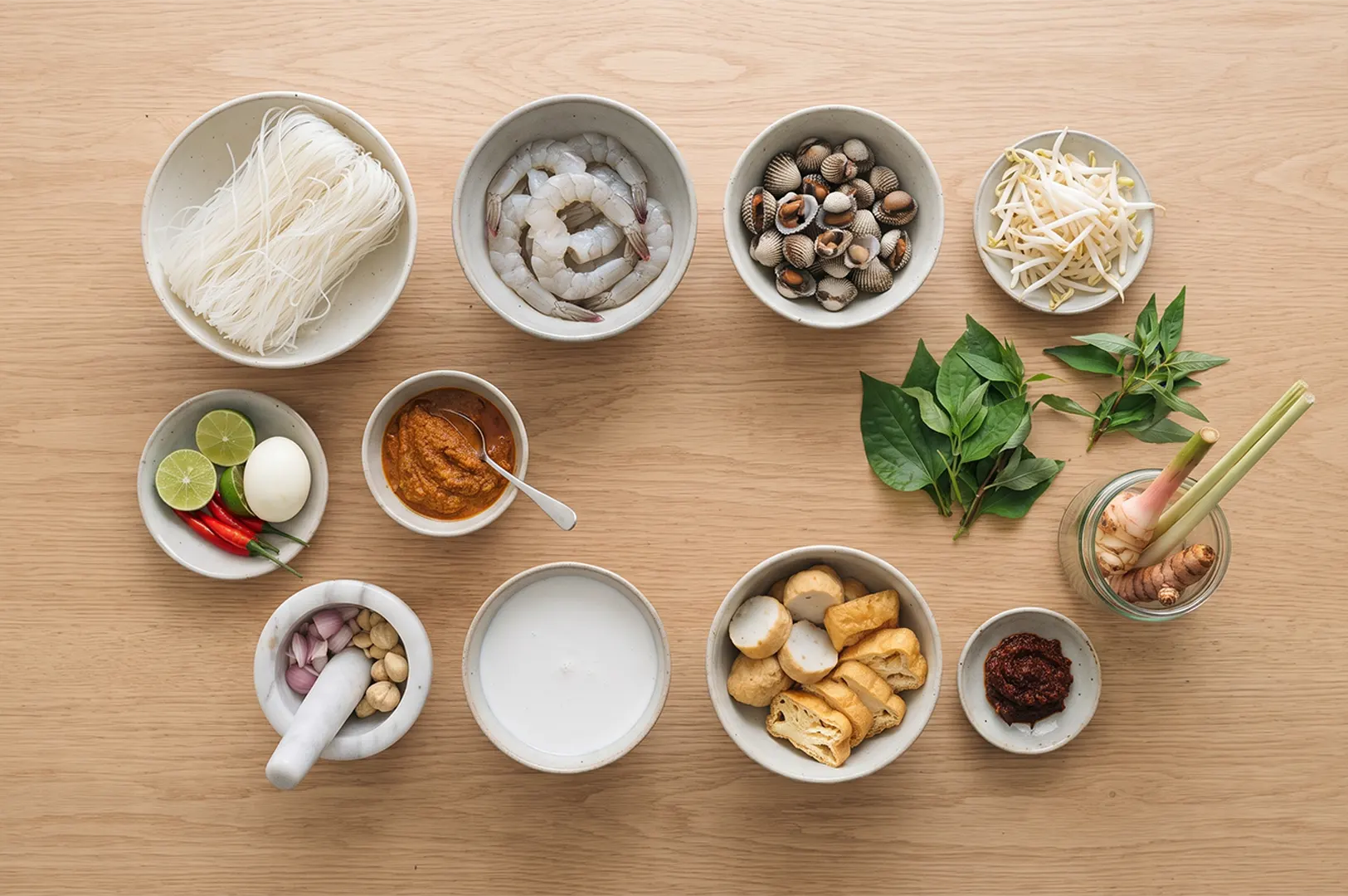
For a long time I blamed the cockles. Turns out I had it wrong. The calories in laksa mostly come from four quiet culprits.
The coconut milk gravy. That creamy, orange richness is the heart of Singapore laksa. It’s also where most of the saturated fat and calories live. HealthHub flags coconut milk and coconut oil as significant sources of high saturated fat. A coconut-rich broth can contribute several hundred calories on its own, depending on how concentrated the recipe is.
The rice noodles. Thick rice noodles or bee hoon carry most of the carbs and carbohydrates in the meal. A bowl doesn’t need to look bigger to hold noticeably more noodles, and those extra carbs add up quietly.
The tau pok. Those fried tofu puffs act like little sponges. They soak up the coconut broth, so you get calories from the tofu, the frying oil, and the gravy trapped inside all at once.
The oil in the laksa paste. The rempah gets fried to release its flavour, and the amount of oil used varies from stall to stall. You usually can’t see how much went in during the cooking process.
So no, coconut milk isn’t the only story. A bowl with lighter gravy can still tip your calorie budget if it’s piled with rice noodles, stacked with tau pok, and floating under a slick of oil.
How to Estimate the Calories in Your Bowl
I’m not going to pretend you can calculate this to the exact number. Hawker food is cooked by eye, not by formula. But you can get close enough to be useful. Here’s how I do it.
Step 1: Name the style. Is it Singapore curry laksa, Katong laksa, asam laksa, Sarawak laksa? A coconut-rich curry bowl and a sour asam bowl are not the same animal, so don’t log them the same way.
Step 2: Judge the portion size. Look at the bowl depth, the noodle mound, the number of tau pok, and how much broth is sitting there. When tracking, I find it more honest to log 0.5, 1, or 1.5 servings than to assume every bowl is standard.
Step 3: Start with a baseline. For a normal hawker bowl, I begin at about 600 calories, then adjust:
Small serving: subtract roughly 100–150
Large serving: add roughly 150–250
Extra rice noodles: add roughly 100–200
Extra tau pok: add roughly 40–80
Egg: add roughly 70–80
Sweet drink: add roughly 80–200
Step 4: Count what you actually ate. If you leave most of the coconut broth behind, your calorie intake is lower than someone who drank the bowl dry. This matters most when there’s a visible oil layer on top.
Step 5: Don’t forget the sides. Otah, fried fish cake, ngoh hiang, a sweet drink. These extras can push you well past your calorie budget without you noticing.
Healthy tip: Order the smaller bowl first. If you’re genuinely still hungry after, add something. Nine times out of ten, you won’t need to.
How to Eat Laksa as Part of a Balanced Diet
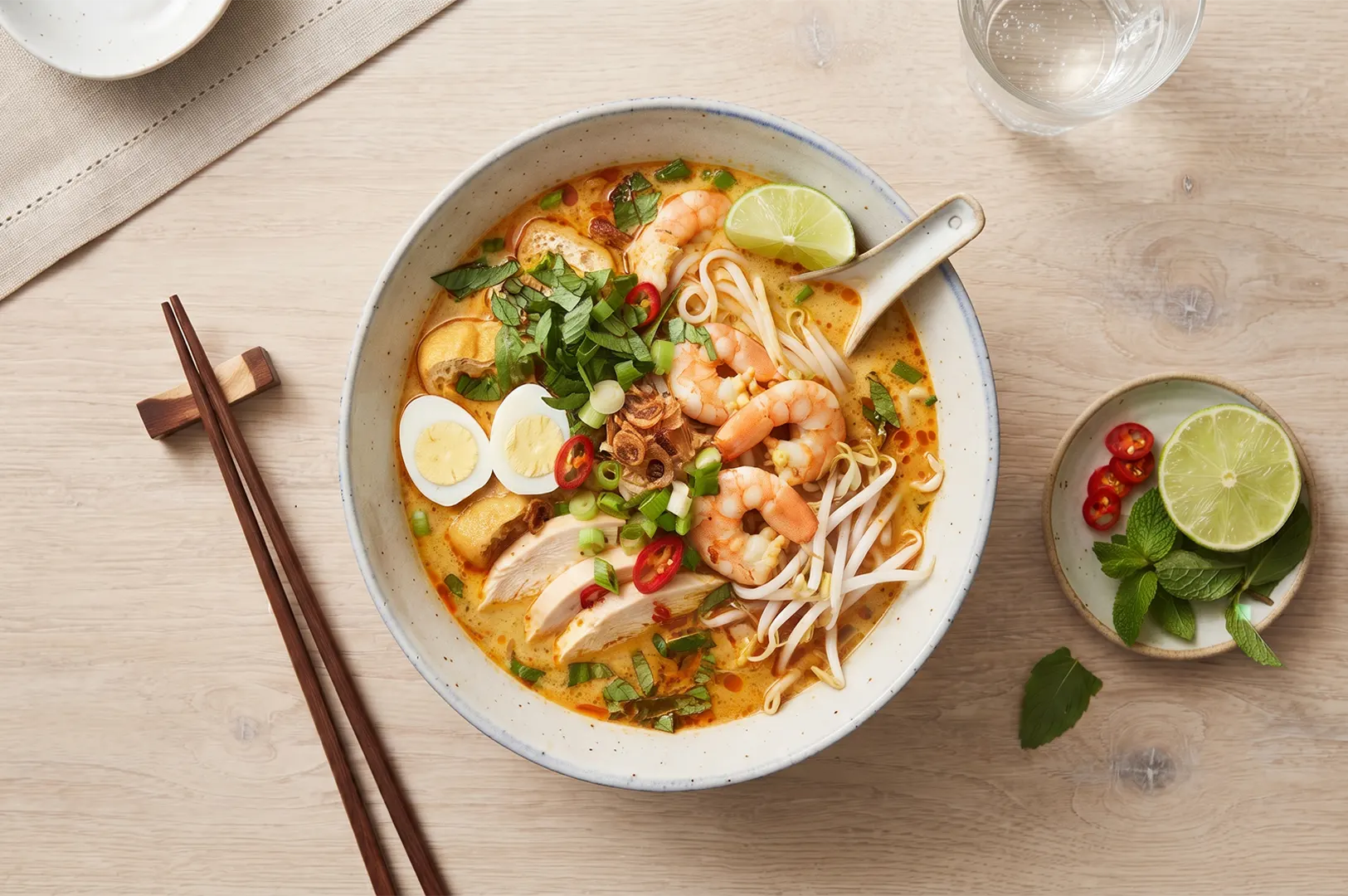
I used to think eating lighter meant giving up laksa entirely. It doesn’t. It just means ordering with a bit of intention, and thinking about how this dish fits into your overall lifestyle and diet.
A realistic order sounds like this:
“Small laksa, less noodles, more bean sprouts, less gravy. No extra tau pok.”
Now, I’ll be honest. Not every stall will do all of that, especially during the lunch rush when there’s a queue of ten behind you. So pick your battles. The requests that actually move the needle:
Choose the smallest size available
Ask for fewer rice noodles
Request more bean sprouts for a bit of fibre
Skip the extra tau pok
Say no to extra coconut milk gravy
Add egg, shrimp, or fish cake if you want more protein
Drink plain water instead of a sweet drink
Stop when you’re comfortably full, not when the bowl is empty
You don’t have to say all of this at once. Honestly, just choosing a smaller serving and drinking water already makes a meaningful difference.
Laksa can sit inside a balanced diet without much fuss. The key is to balance it with the rest of your meals for the day. If laksa is your lunch, aim for a dinner that’s lighter, with plenty of vegetables and lean meat or fish. Don’t try to cook a nutritionally perfect meal every time. Just maintain a reasonable balance across the week, and enjoy laksa in moderation rather than treating it as a frequent, large-portion habit.
Insider knowledge: Some stalls portion their broth and ingredients in advance and simply can’t customise. That’s fair. When that happens, stop trying to change the recipe and control how much you eat instead. You always have a say in that part.
Eating Laksa While Losing Weight: Is It Really Possible?
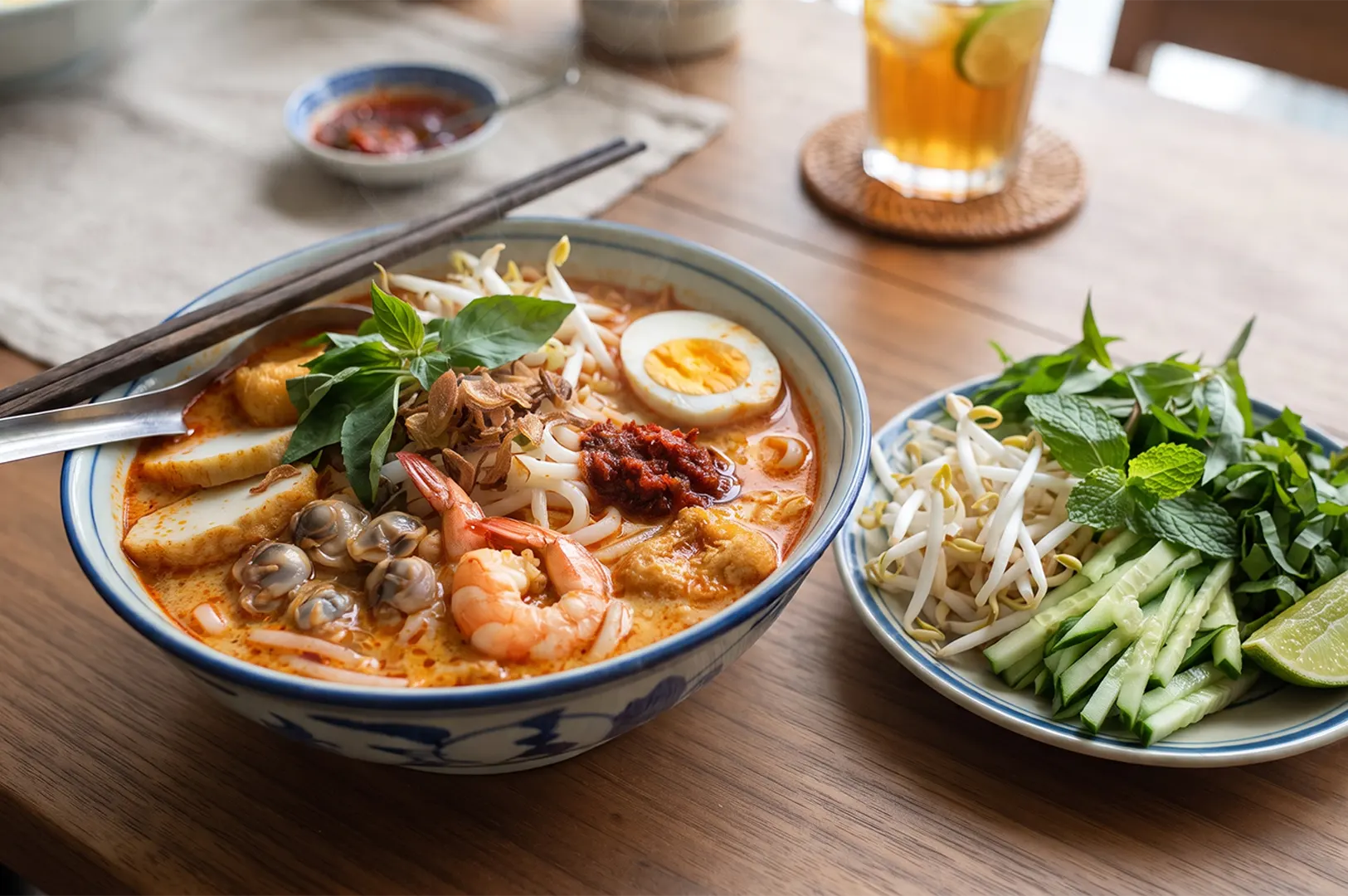
Yes, and I say this from experience. Weight loss comes down to your overall energy balance, not whether laksa is a frequent part of your routine.
The lower calorie approach is straightforward. Choose a smaller bowl. Ask for fewer rice noodles. Leave some of the coconut broth. Keep your protein, shrimp, egg, or fish cake, because it keeps you fuller for longer and supports your weight loss goals without leaving you hungry an hour later. Drink water, not sugar. Balance the rest of your day with vegetables and wholegrains.
A small, modified bowl with water can sit around 400 to 500 calories. That fits into a moderate daily calorie target without drama, and it means laksa can remain a frequent part of your food life even while you’re working toward a healthier weight.
The bigger risk with weight loss is what surrounds the bowl. Sides, sweet drinks, and a large noodle portion are where most people quietly go over their calorie budget. Address those first before changing the dish itself.
I’d also suggest pairing your meals with some regular exercise. A 30-minute jog burns roughly 250 to 300 calories depending on your weight and pace. A moderate cycling session does similar work. Swimming laps can burn even more. None of this means you need to exercise every time you eat laksa. It just means that staying active at a moderate pace makes the occasional full bowl much easier to accommodate.
If you’re tracking your BMI or working toward a specific weight loss target, treat laksa like any other higher-calorie meal: enjoy it in moderation, keep portion size in check, and fill the rest of the day with lighter choices. If you’re unsure how it fits your specific goals, consult a dietitian who understands the Singapore context. On days when you want something genuinely lighter, Fortune Center’s vegetarian food scene is worth exploring as a lower-calorie alternative that still feels like a proper meal.
Gaining Weight: When Laksa Works in Your Favour
Not everyone is trying to eat less. If you’re trying to gain weight or build muscle, a full bowl of Singapore laksa actually offers a reasonable spread of macronutrients, particularly carbohydrates and fat.
A large bowl with extra rice noodles, egg, shrimp, and fish cake can push past 700 to 900 calories without much effort. Paired with a sweetened drink and a side, you’re looking at a meal that contributes meaningfully to a higher daily calorie target.
The less useful aspect of gaining weight intentionally through laksa is the low fibre and vegetable content. If laksa is a frequent part of your diet, you’ll want to make sure your other meals carry the nutritional load in terms of micronutrients, fibre, and a variety of protein sources.
For muscle building specifically, the protein content from shrimp, cockles, egg, and fish cake is helpful, though it’s not a high-protein dish the way grilled chicken and brown rice would be. It’s not nutritionally empty either. If gaining weight is your goal, enjoy the full bowl, add extra protein toppings where the stall allows, and make sure your overall diet includes enough vegetables and adequate rest to support recovery.
Common Mistakes That Blow Your Calorie Budget
I’ve made most of these myself, so let me save you the trouble.
Removing the seafood to save calories. This is the least efficient move there is. Shrimp and cockles are protein, not the main calorie source. Take them out while keeping the full rice noodles and coconut milk gravy, and you’ve just made your meal less satisfying for almost no saving.
Drinking every drop of broth. That’s where the coconut milk, saturated fat, and salt live. Finishing the soup gives you the highest calorie and sodium intake of the whole meal, and it often pushes people past their daily target without them realising.
Ignoring the drink. A sweet iced kopi or bandung can add 100 calories or more and won’t fill you up at all. It’s genuinely the easiest thing to change, and the one most people overlook when they’re trying to lower their overall calorie intake.
Assuming “small” means the same everywhere. One stall’s small is another stall’s regular. Price alone won’t tell you either. Judge with your eyes and your hunger.
Thinking homemade laksa is automatically a lower calorie option. I once cut the coconut milk at home, felt clever about it, then poured in three tablespoons of oil and served a mountain of noodles. Not lighter at all. If you’re cooking at home, measure your oil, use light coconut milk, go easy on the laksa paste, and keep the noodle serving moderate.
Eating Singapore Laksa and Managing Your Weight Loss Goals
Is asam laksa lower in calories?
Often, yes. Asam laksa uses a sour, tamarind-and-fish broth instead of coconut milk, so the calorie content tends to be lower and the saturated fat much reduced. Just make sure you’re not logging a coconut-based bowl using an asam number. The health risks of confusing the two are mostly just inaccurate tracking, but they matter if you’re logging carefully.
Can I eat laksa while losing weight?
Yes. Weight loss depends on your overall habits, not a single dish. A smaller bowl with fewer rice noodles, less gravy, and water instead of a sweet drink can fit into a moderate calorie target. If you need guidance tailored to your specific lifestyle and BMI, consult a dietitian.
What about high blood pressure?
Laksa runs high in sodium and salt. HPB suggests keeping sodium under about 2,000mg a day, and one referenced laksa entry sits around 511mg per 100 grams. A full bowl can eat into that budget fast. The health risks are real for people managing hypertension, so if you’ve been told to watch your salt intake, please consult your doctor or dietitian rather than relying on a general guide like this one.
Does leaving the coconut broth behind actually help?
It does, for both calories and sodium, especially when the broth is rich and oily. I won’t promise a neat number like “saves 200 calories” because recipes vary too much. But taking just enough soup to coat the rice noodles is the lightest way to enjoy it.
How often can I eat laksa without it affecting my weight?
That depends on the rest of your diet and how active you are. For most people in Singapore, laksa a few times a week in moderate portions, as part of a varied balanced diet, is not a problem. Daily large bowls with sweet drinks, chili on the side, and otah at every meal is a different story. Enjoy it, but keep it in perspective and log what you eat if tracking helps you stay on course.
The Bottom Line on Calories in Laksa
Here’s what I keep coming back to. A standard bowl of Singapore laksa is around 550 to 650 calories, and the coconut milk, rice noodles, and tau pok matter far more than the shrimp or cockles ever will. Portion size is the simplest lever. Water is the easiest swap. An occasional full bowl, enjoyed properly, is nothing to feel guilty about.
HPB’s My Healthy Plate framework is a useful guide here: roughly a quarter wholegrains, a quarter protein, and half fruit and vegetables. Laksa gives you plenty of carbs but not many vegetables, so let the rest of your day fill that gap with fibre-rich ingredients and lighter dishes.
A few real-world scenarios worth keeping in mind:
The office lunch. Regular laksa, nearly all the coconut broth finished, iced kopi on the side. That’s roughly 650 to 830 calories in total. The easiest fix is swapping the drink for water, not changing the bowl.
The lighter order. Small laksa, fewer rice noodles, shrimp kept in, half the gravy left behind, water to drink. Around 400 to 500 calories. Same dish, same soul, just tuned down a little.
The sides trap. Regular laksa, otah, fried ngoh hiang, barley drink. The calorie budget blows past 900, sometimes past 1,000. When people tell me laksa is the problem, it’s usually the sides and the drink doing the damage.
I still eat laksa. I still love it. I just order it like someone who plans to keep enjoying it for a long time. That’s the whole approach, really. Not perfection. Just a bit of attention, a lighter hand on the rice noodles, and water in the glass.
If you want more practical, honest guidance on eating well in Singapore, come visit Healthy Food Guide. Pull up a chair. There’s plenty to share.