For years, I thought getting enough protein meant reaching for something imported. A tub of chicken breast from the gym shop. A scoop of powder in a shaker bottle. That was the story I’d been told, and I believed it.
Then one afternoon I was sitting at my usual fish soup stall, watching the uncle drop thick slices of fish into a clear broth. Steam rising. A plastic spoon in my hand. And it struck me, quietly, that this bowl had been feeding me protein all along.
I’d been looking past the food I grew up with, searching for it somewhere far away.
So let me share what I’ve learned since. Not as an expert lecturing you, but as someone who eats at these hawker centres too, and got a lot wrong before getting it a little more right.
A quick word before we start. The Health Promotion Board’s My Healthy Plate is the simplest guide I know: fill a quarter of your plate with protein, a quarter with wholegrains like brown rice, and half with vegetables and fruit. Keep that picture in your head. It carries you further than any number.
And one honest caveat. Every protein figure below is an estimate. Hawker food isn’t weighed to a formula. One chicken rice stall gives you twice the meat of another. So treat these as guides, not gospel.
Chicken Rice: One of the Best High-Protein Hawker Food Options (25–40g)
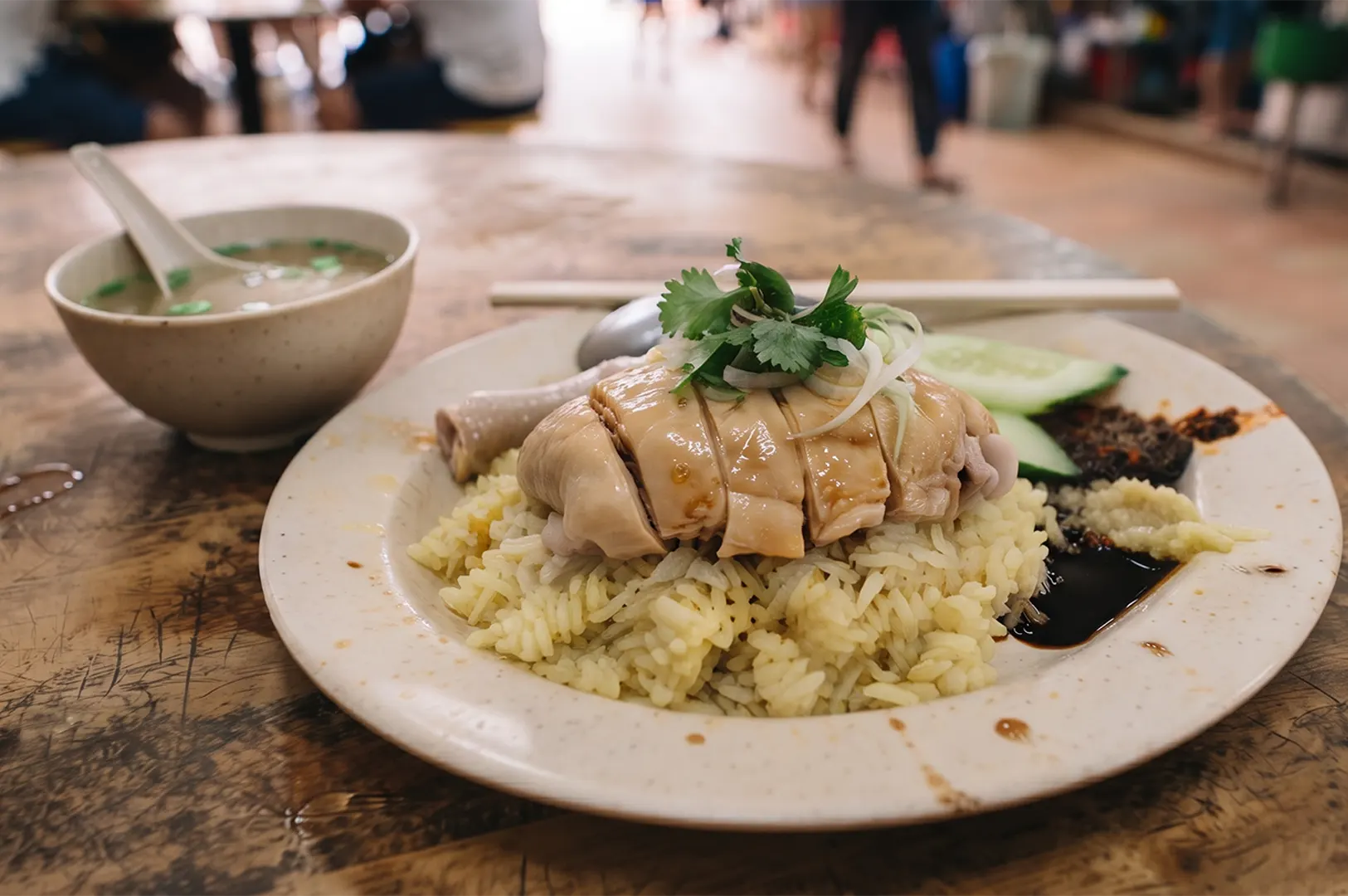
Chicken rice is where I’d start most people. The protein sits right there in the meat, so the real question is how much chicken you actually get.
A normal serving gives you around 25 to 35 grams. Ask for extra chicken and you can reach 35 to 45. It’s also one of the most budget-friendly high-protein hawker meals out there.
How I’d order it: steamed breast meat, less rice, chicken skin removed or reduced, add more vegetables. If you want more, just ask, “Extra chicken, how much?”
What to watch: when the plate is mostly oily white rice, or the chicken is more skin and bone than lean meat. Removing the skin cuts saturated fat meaningfully. A sugary drink alongside also undoes some of the good work, so go for water or unsweetened tea instead.
Expect to pay around S$4.50 to S$9.
For more detailed insights on portion sizes and weight loss tips related to chicken rice, check out this helpful article.
Pro tip: Steamed chicken with less chicken skin is far easier to fit into a lighter meal than the roasted version, though roasted still gives you good protein if that’s your preference. Swap white rice for brown rice if the stall offers it — you’ll get more dietary fibre with the same familiar dish.
Sliced Fish Soup: Light, Lean, and Loaded with Protein (25–40g)
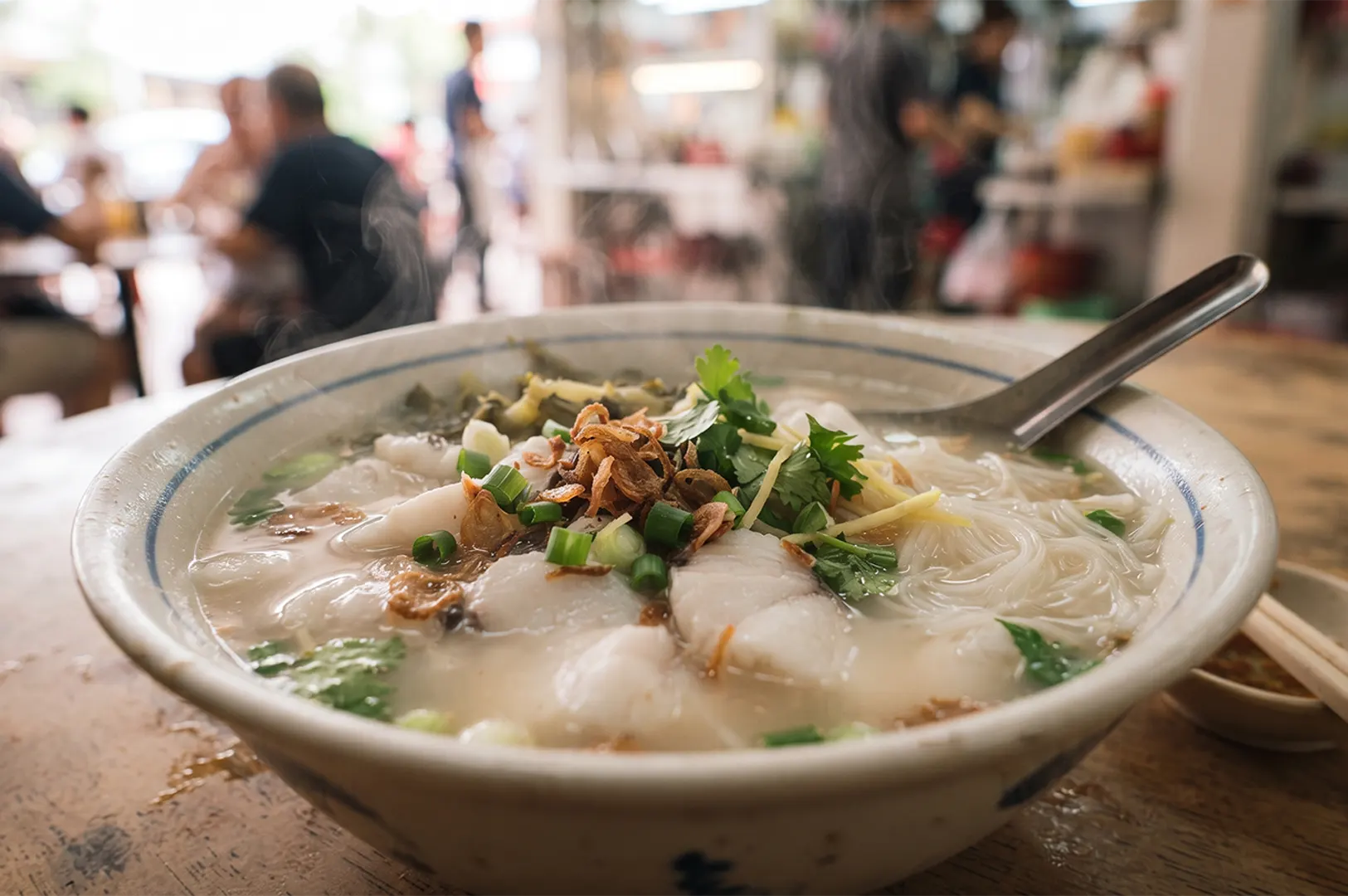
This is my quiet favourite for high-protein hawker food. A clear bowl with a generous fish portion can give you 25 to 40 grams, and it feels light doing it. No deep-fried food, no heavy gravy, just clean protein in a warm soup.
The catch is consistency. Some stalls are generous with thick slices. Others give you a big bowl of soup and three thin pieces of fish.
How I’d order it: sliced fish, not fried. Extra fish, less noodles. Add tofu or soft-boiled eggs if you want to build it up further.
What to watch: battered deep-fried food passing off as fish soup, added evaporated milk, or a broth with an oily sheen. The soup can be high in sodium too, so you don’t have to drink every drop.
Around S$5.50 to S$11, depending on the fish.
Hawker Food and How to Make It Work for You: Cai Fan (25–45g)
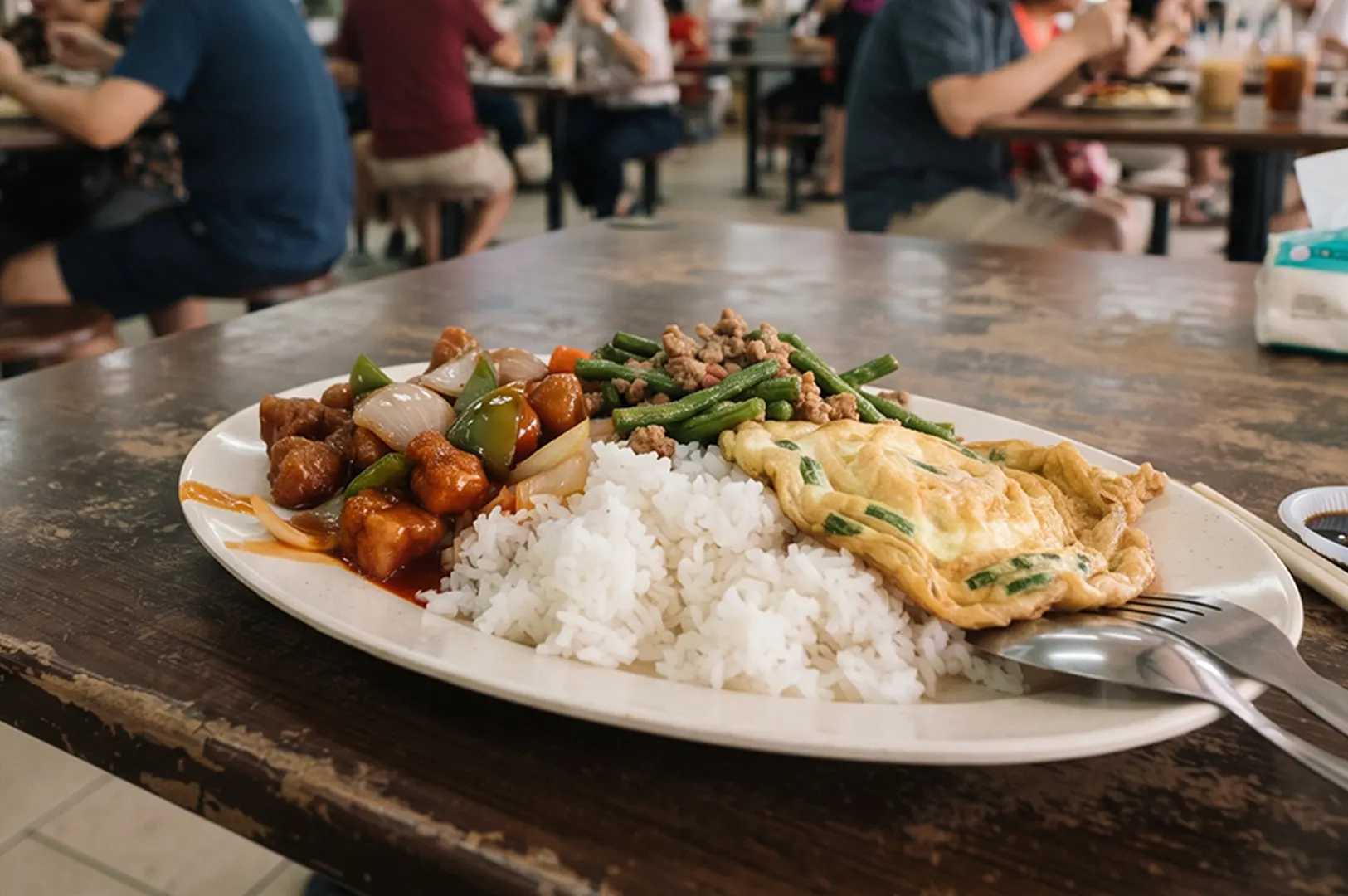
If flexibility matters to you, cai fan is one of the most practical high-protein hawker options. You choose your own proteins, and a well-picked plate can reach 25 to 45 grams.
How I’d order it: less rice, one meat, one egg or tofu, two vegetables. Need more protein? Two protein dishes instead of one.
Good picks include steamed fish, lean meat like chicken, steamed egg, tofu, tau kwa and minced-meat tofu. These are healthier food choices that deliver real nutritional content without excess fat or added sugar.
What to watch: the plate can look balanced while hiding a lot of oil and gravy. I’d go easy on sweet-and-sour pork, battered chicken, luncheon meat and thick curry as everyday choices. The Health Promotion Board’s advice holds here: lean and fresh protein, more often than fatty and processed options.
Roughly S$5 to S$9, though seafood pushes it higher.
Insider knowledge: Cai fan pricing is unpredictable because premium meats and fish cost more. Ask before you point at the big fish slice, or the auntie may surprise you at the till.
Yong Tau Foo: A High-Protein Hawker Meal You Control (20–35g)
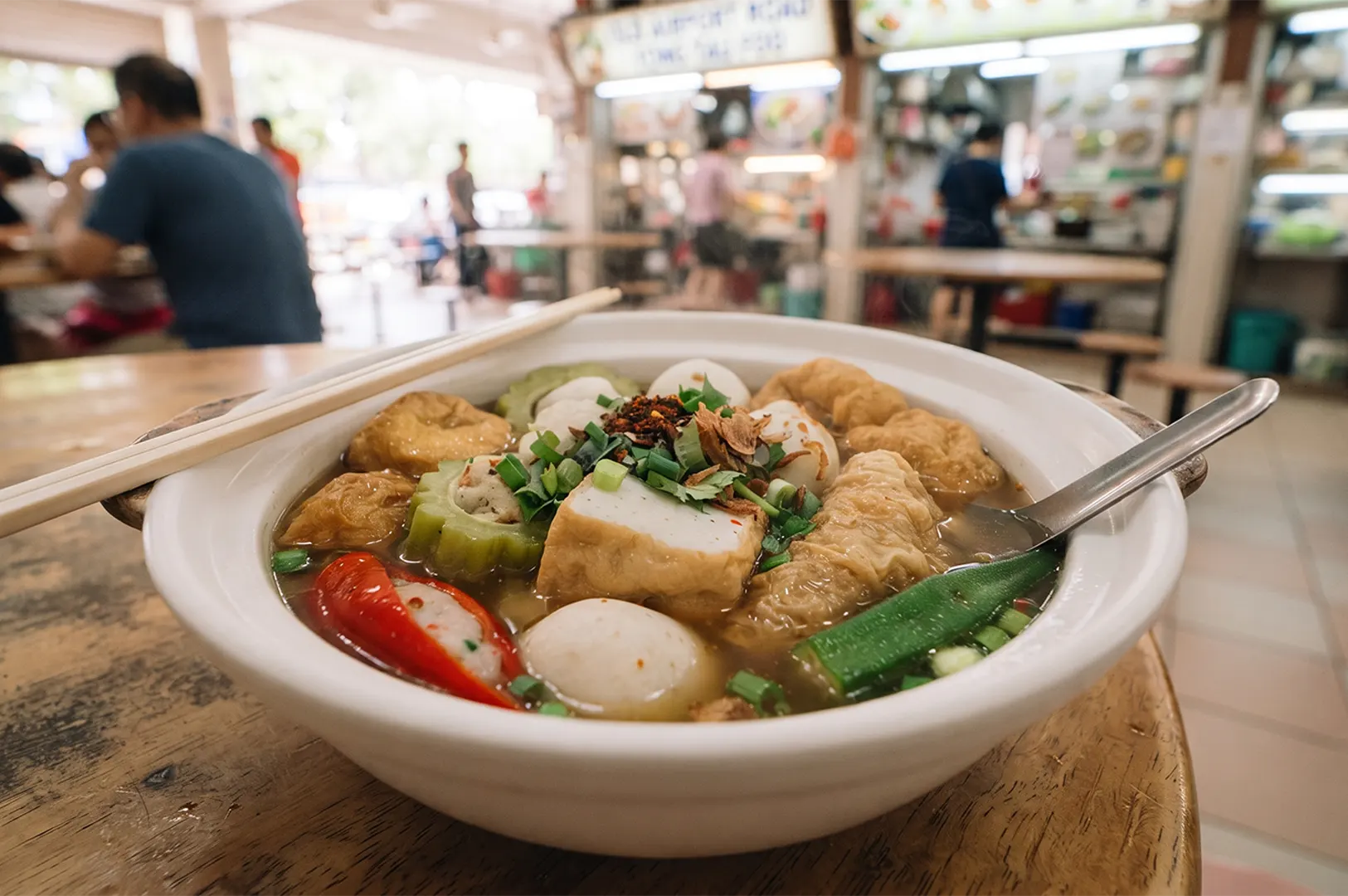
Yong tau foo is only as good as what you choose. It can be a strong high-protein hawker pick, or it can become a bowl of noodles, mushrooms and bee hoon with almost no protein at all.
A six-piece order built around protein gives you 20 to 25 grams. Add tofu, egg and more fish-paste items and you climb toward 30 to 35.
How I’d order it: plain tofu, tau kwa, stuffed bitter gourd, stuffed chilli, an egg, two leafy vegetables, clear soup, moderate noodles.
What to watch: picking four vegetables, mushrooms and a single fishball. That’s nutritious in terms of vitamins and dietary fibre, but it won’t give you enough protein. Watch the fried tau pok, sweet sauce and laksa gravy too.
About S$5 to S$8.
Lean Meat Options Worth Ordering at Your Hawker Centre
Not every hawker dish makes it easy to get lean meat, but a few are reliably good once you know how to order.
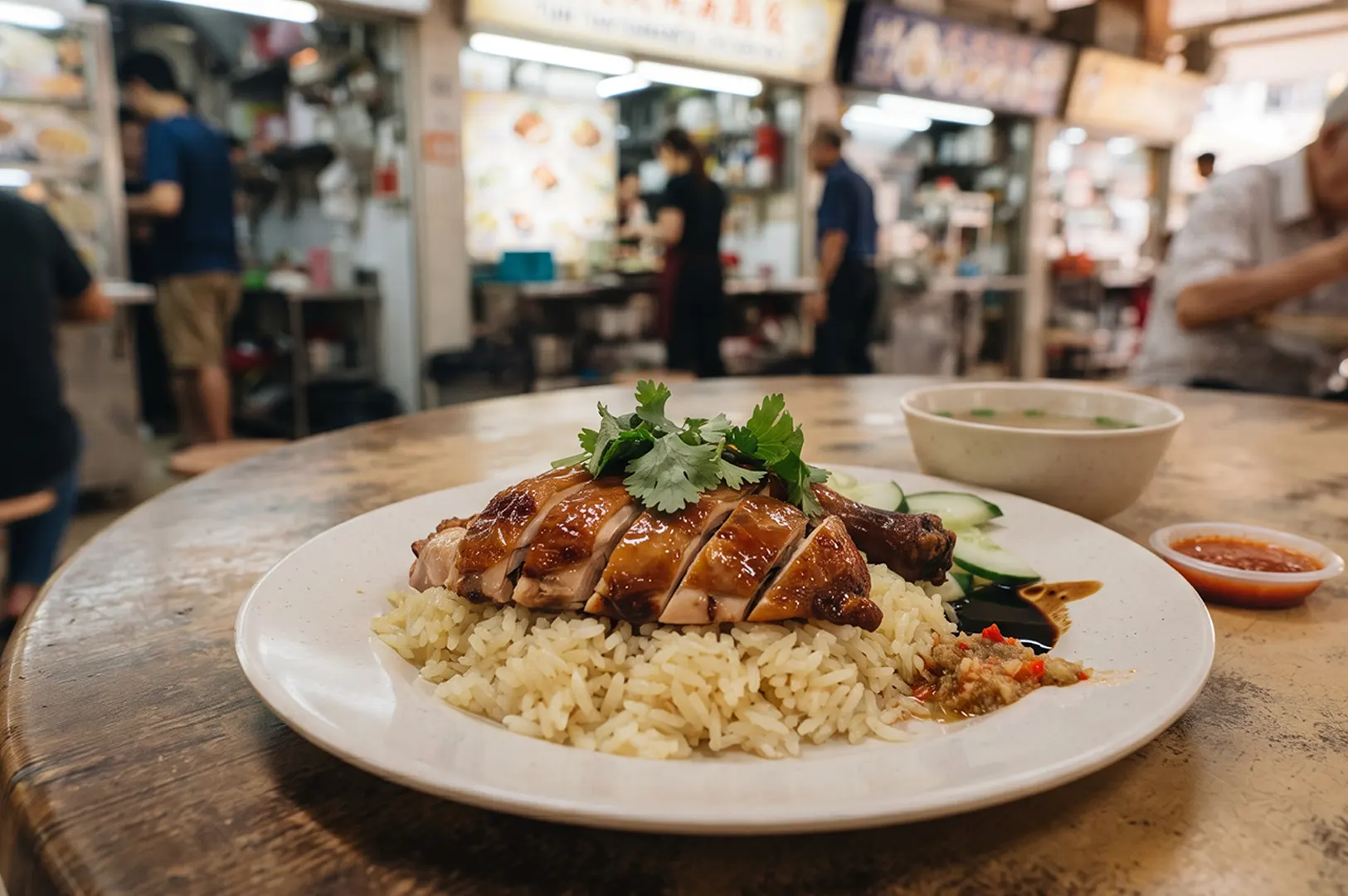
Roast Chicken or Duck Rice (25–40g): Roast meat stalls give you a visible portion and usually let you ask for more. Depending on the cut, you’re looking at 25 to 40 grams.
Order roast chicken with less rice, less sauce, and add vegetables. Or ask for chicken and duck with less skin. Watch out for fatty duck skin, pork belly, sweet char siu glaze and generous gravy. The protein is real, but I still reach for sliced fish soup or steamed chicken more often on ordinary days.
Around S$5 to S$9.
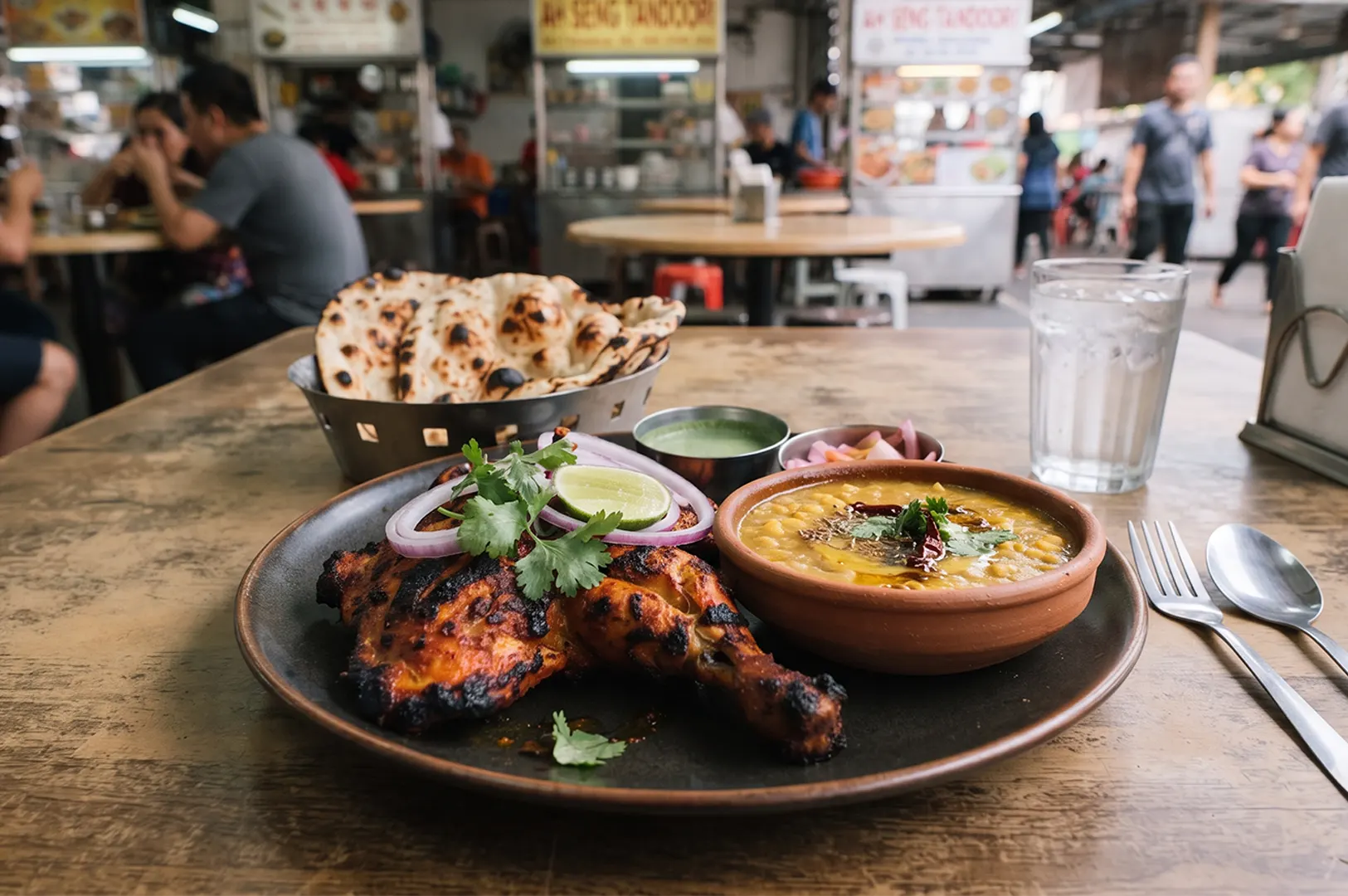
Tandoori Chicken with Dhal (30–45g): This is one of the clearest high-protein choices at hawker centres. A good chicken portion with dhal alongside can reach 30 to 45 grams. The chicken is roasted rather than fried, and the dhal adds plant protein and dietary fibre. It costs a little more, but it earns it.
Order tandoori chicken with one or two chapatis, dhal, a vegetable side, and water or unsweetened tea. Watch out for butter brushed on the bread, creamy sauces, large naan portions, and small chicken pieces that are mostly bone.
Around S$7 to S$12.
Hawker Centres and Healthier Food Choices: What to Look For
Hawker centres aren’t the enemy of healthy eating. They’re full of healthier options if you know what to look for. The Health Promotion Board’s Healthier Choice Symbol is a useful marker, and many stalls do offer healthier food choices when you ask.
Here’s a practical guide for common hawker meals:
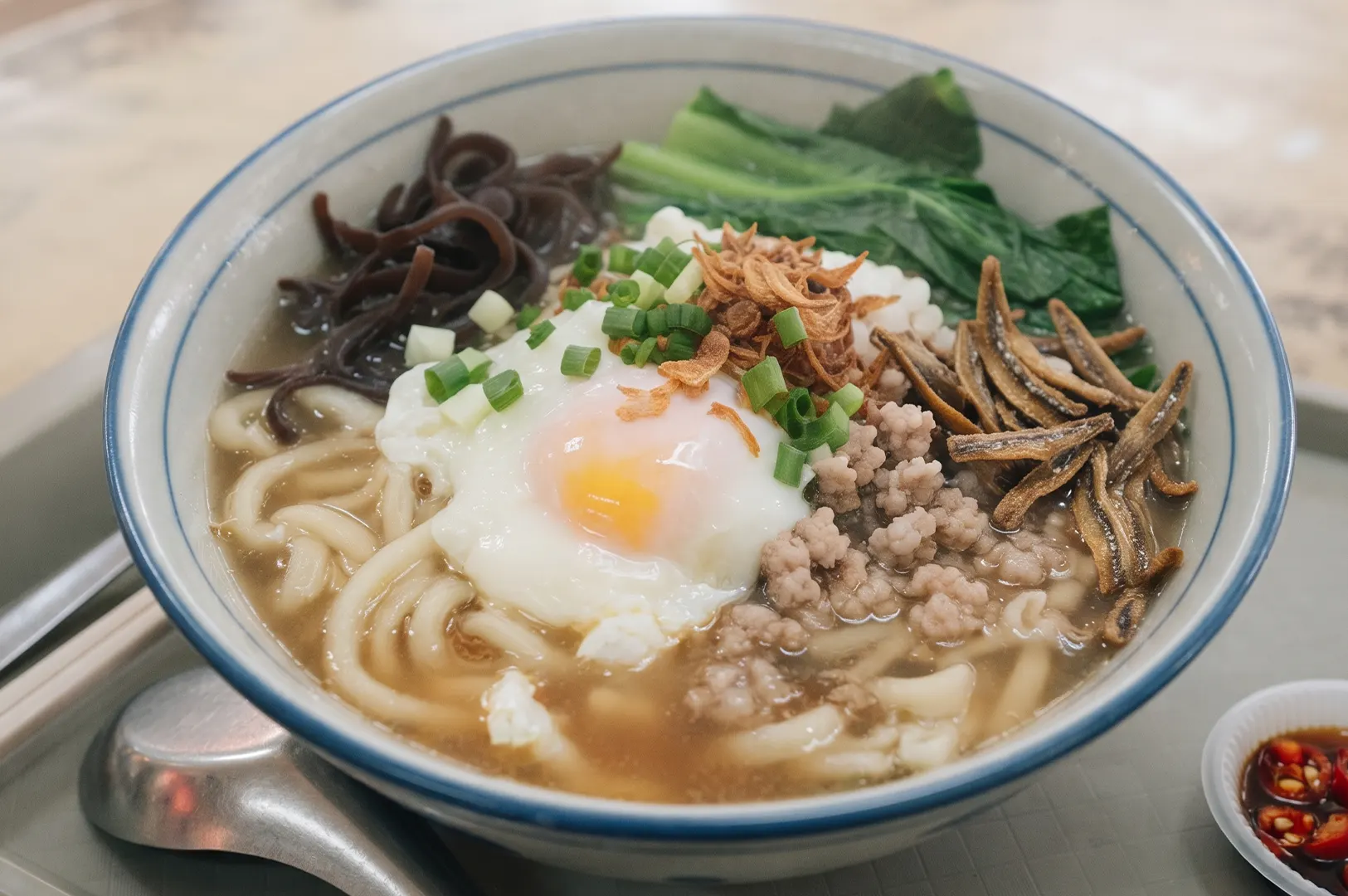
Ban Mian with Egg and Minced Meat (20–35g): Ban mian has a broader protein base than plain noodle soup. Add egg and minced meat, less noodles, and more vegetables. Watch for a big pile of noodles with only a small spoon of meat. You want to see a whole egg and a proper minced meat portion.
Roughly S$5 to S$8.
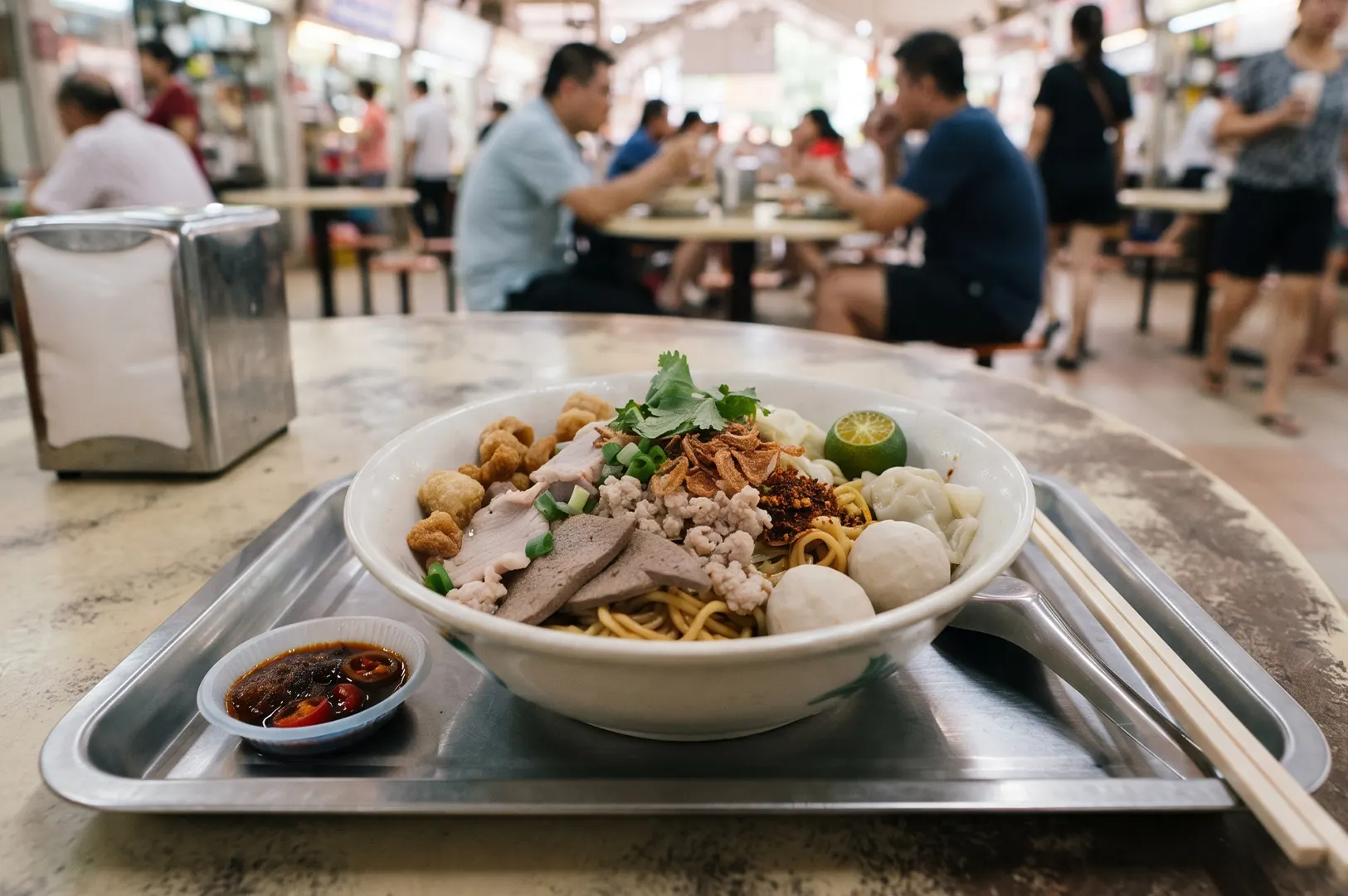
Bak Chor Mee (20–30g): Minced pork, sliced pork, meatballs, sometimes liver. A full serving gives you 20 to 30 grams. Order with less noodles, extra minced pork, and vegetables. The soup version makes it easier to reduce added oil and salty sauce.
Around S$5 to S$8.
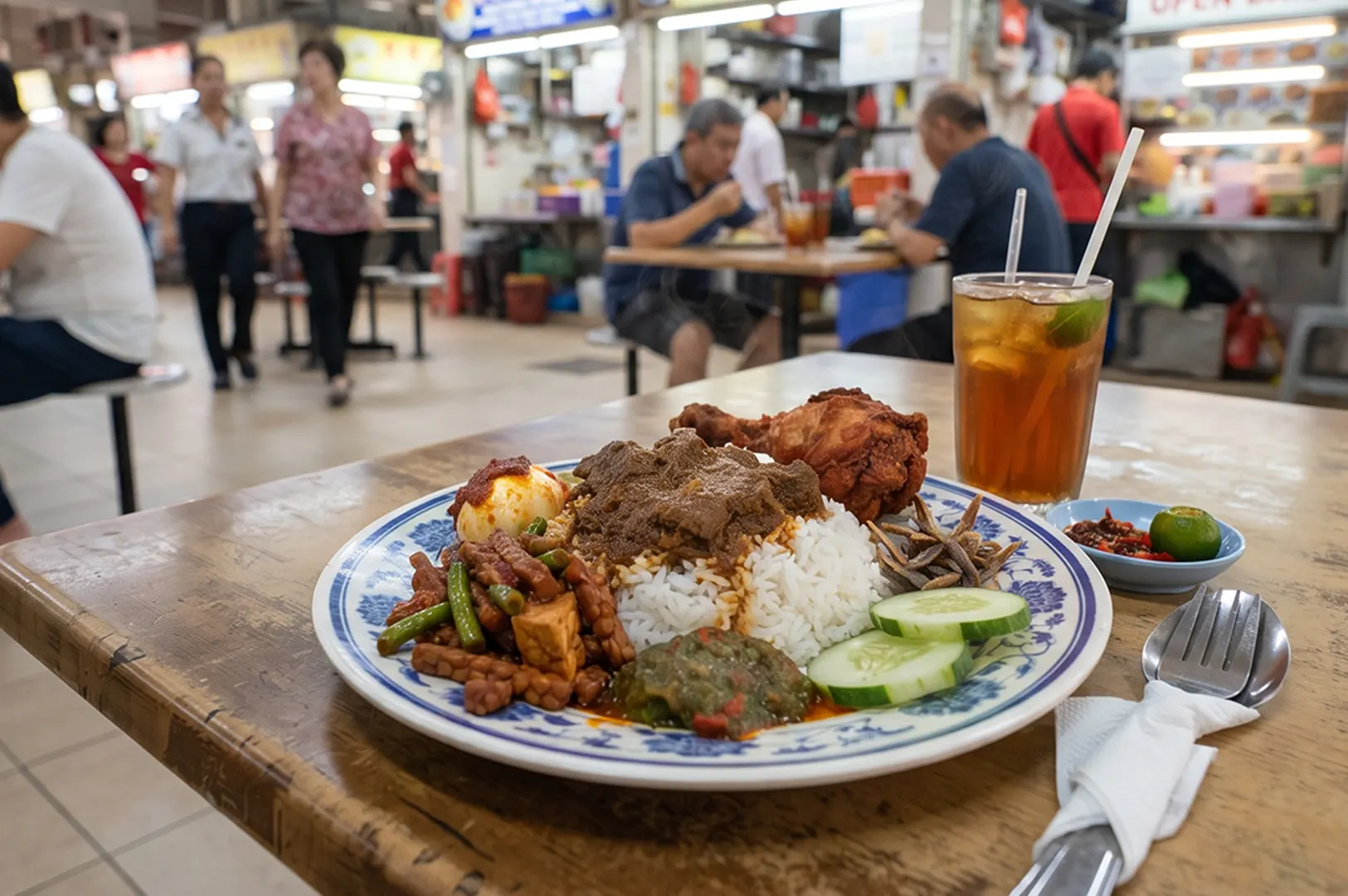
Nasi Padang (25–40g): One plate, many proteins. Assembled thoughtfully, nasi padang gives you 25 to 40 grams from animal and plant sources. Order less rice, grilled chicken or fish, tempeh, two vegetables, and less gravy. Strong picks include ayam bakar, grilled fish, boiled egg, tempeh and tahu. Watch out for coconut milk, deep-fried food, and sugary sambal adding hidden calories.
Roughly S$6 to S$11.
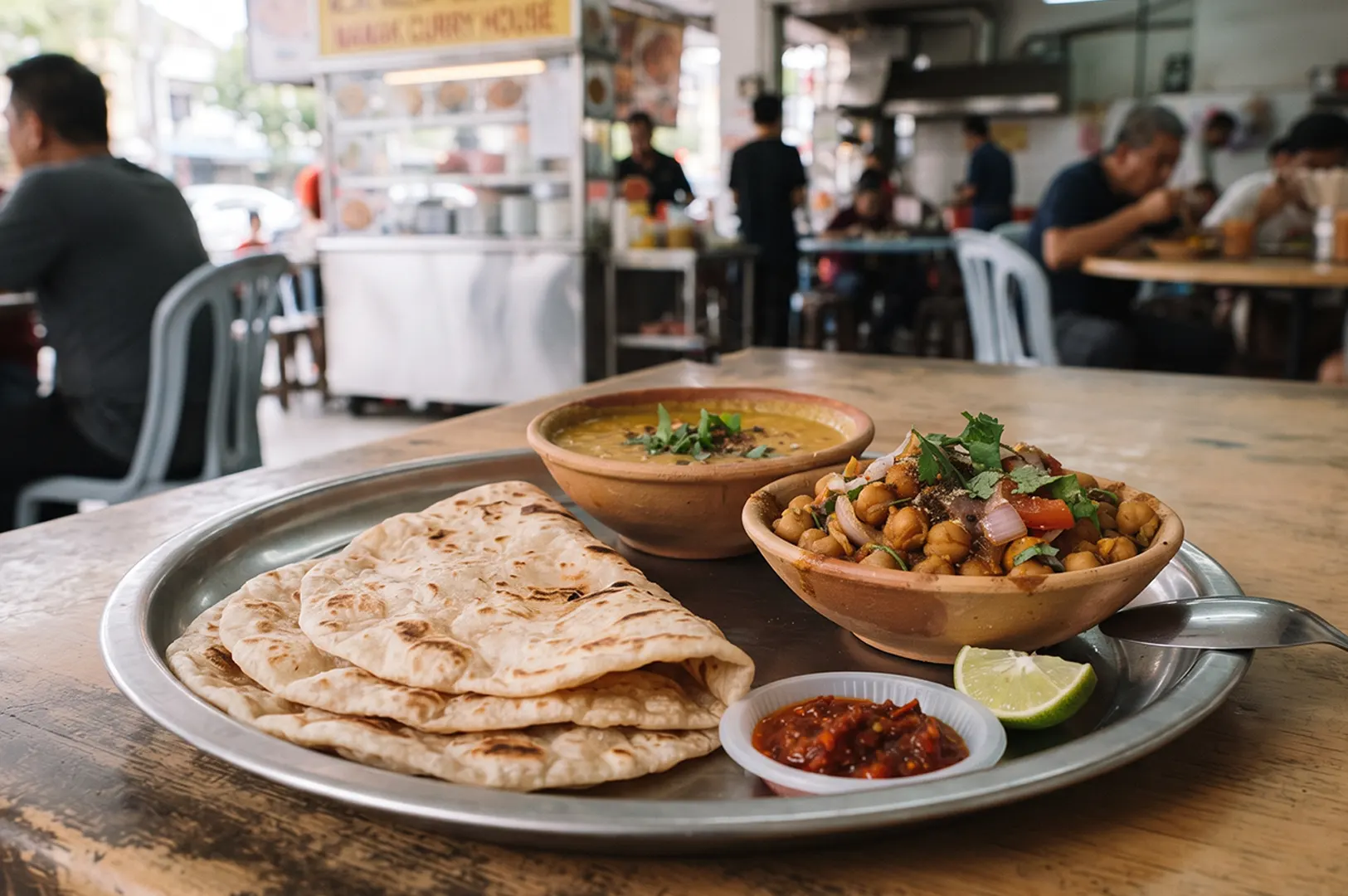
Chapati with Dhal and Chickpeas (15–25g): A small spoon of dhal for dipping isn’t a protein serving. A generous dhal portion with chickpea curry is. Two chapatis with both gives you 15 to 25 grams. Pair with egg thosai and extra sambar for more. Go easy on the ghee and added sugar in sauces.
About S$4.50 to S$8.
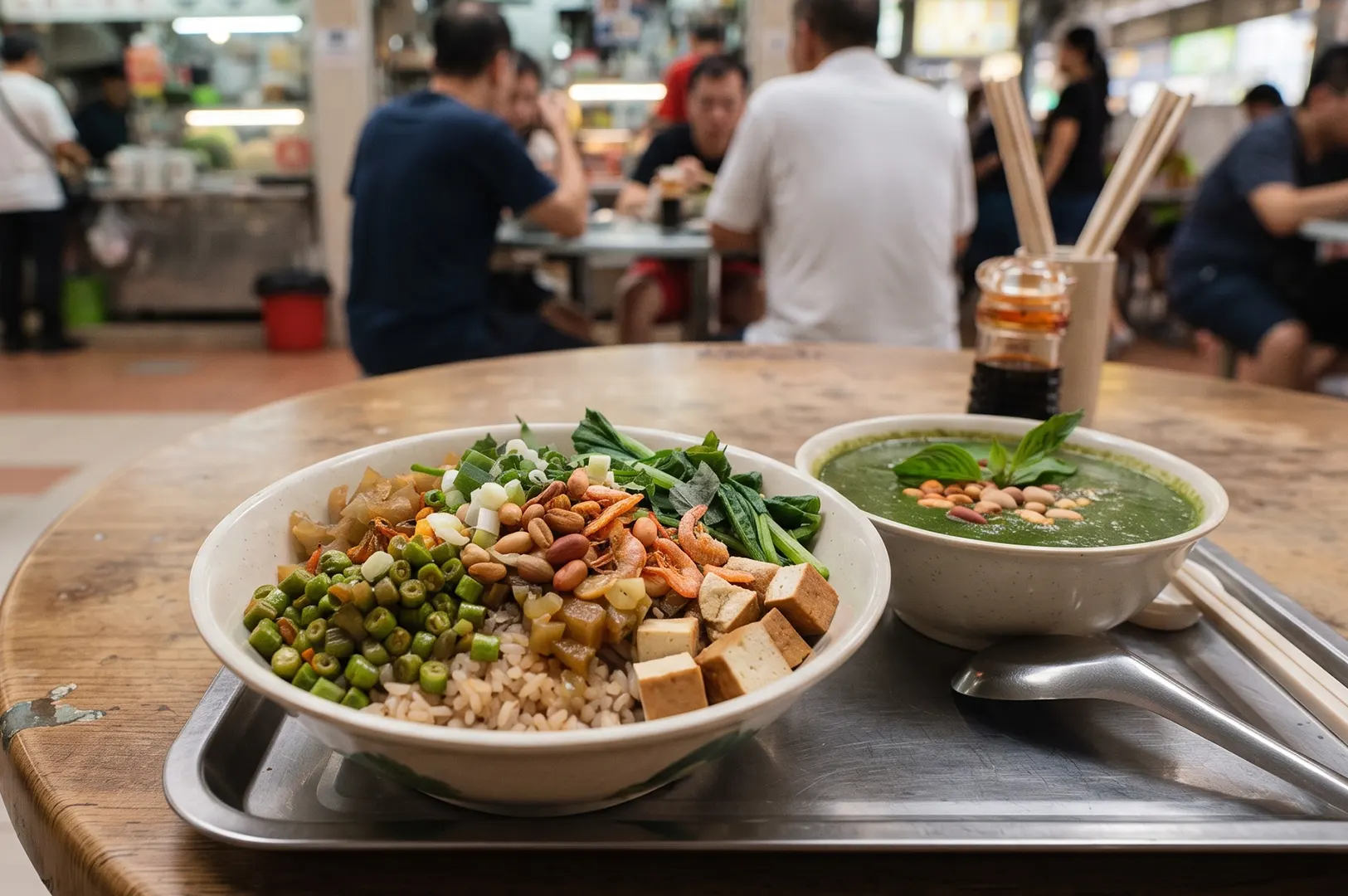
Thunder Tea Rice (18–30g): The standard bowl leans on rice and vegetables. Upgraded with added tofu, tau kwa or an egg, it reaches 18 to 30 grams. Don’t rely on the peanuts as your main protein — they’re nutritious but energy-dense.
Roughly S$5 to S$9.
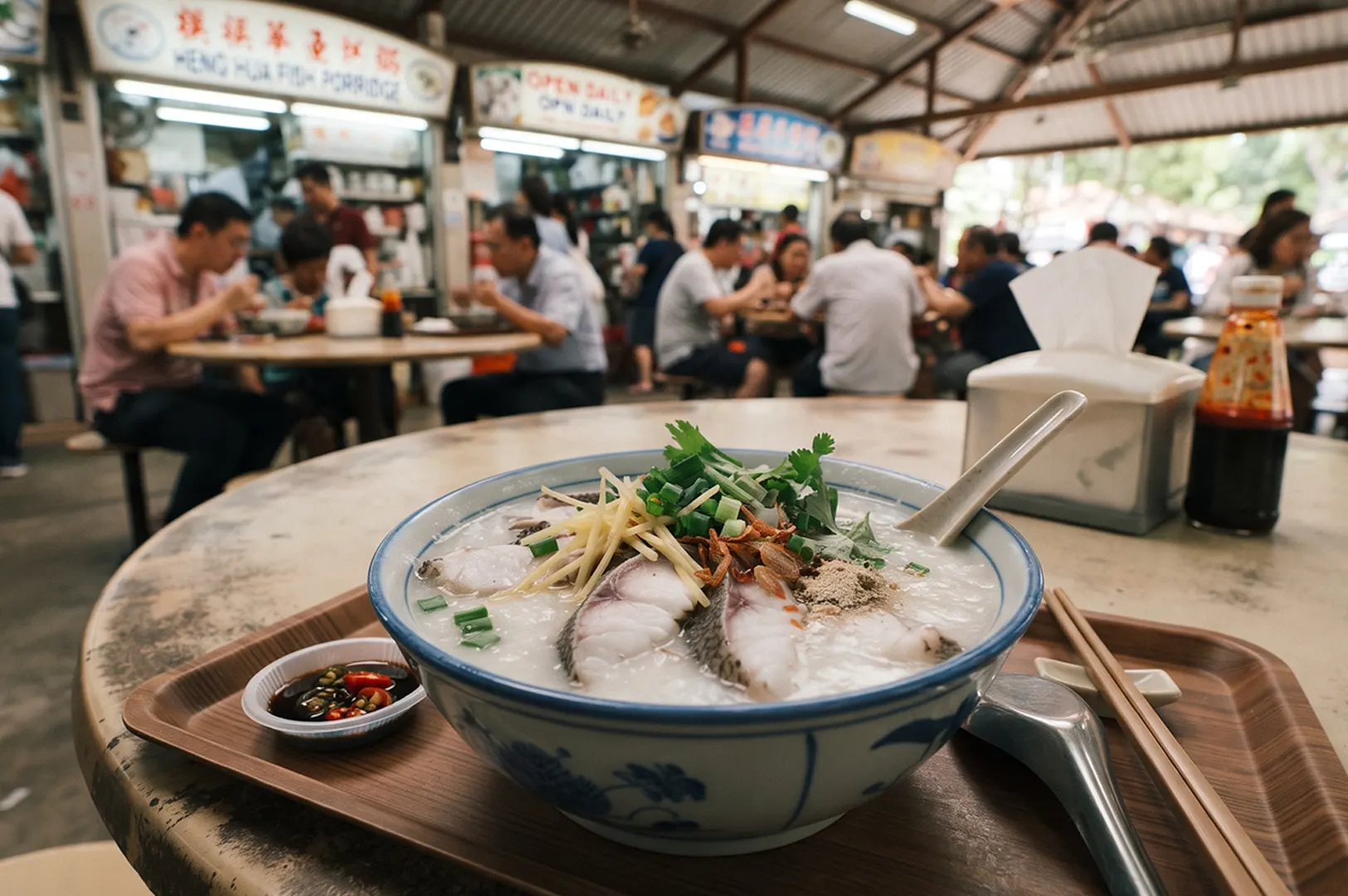
Fish or Chicken Porridge (20–35g): The porridge itself isn’t the protein. The fish, chicken and soft-boiled eggs you add are. A generous bowl gives you 20 to 35 grams. Order extra fish and an egg, or chicken porridge with egg and less fried dough.
Around S$4.50 to S$8.
Healthier Hawker Meals: Less Oil, More Protein
One thing I’ve learned ordering hawker meals over the years: less oil almost always means a better meal. It’s not about being restrictive. It’s about balance.
When I ask for less oil, less salt, or less gravy, I’m not turning hawker food into diet food. I’m just making room for the parts that matter: the lean meat, the tofu, the egg, the fish. The protein that fills you up and keeps muscle mass intact as you get older.
Dishes like char kway teow and mee goreng can be high in trans fat and saturated fat. Carrot cake fried with a lot of oil or nasi lemak loaded with fried sides are worth keeping as occasional treats rather than everyday hawker meals. That doesn’t mean cutting them out. It means being honest about how often and how much.
Pro tip: Ask for less oil and less salt at stalls where it’s realistic, like when ordering bee hoon, fried rice, or noodle dishes. Most hawkers will accommodate it if you ask politely and at the right moment — not mid-service during the lunch rush.
High-Protein Hawker Picks for People Who Want to Lose Weight
If you’re trying to lose weight, you don’t need to avoid hawker centres. You need to be a little more deliberate about what you order.
High-protein hawker meals help you feel full for longer, which makes it easier to eat less without feeling deprived. The key is getting enough protein without piling on saturated fat, added sugar, or deep-fried food.
My practical picks for this goal:
Sliced fish soup with extra fish, an egg, and less noodles
Steamed chicken rice with less rice, more vegetables, and chicken skin removed
Cai fan with steamed fish or chicken, tofu, and two vegetables
Yong tau foo with tofu, tau kwa, egg, and clear soup
Chapati with dhal and chickpeas instead of fried bread
These are all delicious options that don’t require you to eat sad salads or skip the hawker centre entirely.
High-Protein Hawker Eating: Getting Enough Protein Every Day
Getting enough protein isn’t a one-meal problem. It’s a daily pattern.
Most people I know eat almost nothing at breakfast, a little at lunch, then load up at dinner. Spreading protein more evenly works better for maintaining muscle mass and keeping energy steady across the day.
A simple daily pattern at hawker centres and beyond might look like:
Breakfast: soft-boiled eggs with kaya toast, or tuna on wholemeal bread, or unsweetened soy milk with an egg
Lunch: fish soup with rice and tofu, or chicken rice with less rice and added vegetables
Snack: a cup of low-fat milk, a small portion of roasted chickpeas, or a tuna wrap
Dinner: cai fan with lean meat, egg and two vegetables, or ban mian with minced meat and egg
The protein doesn’t have to come from expensive sources. Eggs, tofu, dhal, and fish at hawker centres are all affordable and genuinely nutritious.
A Few Questions I Get Asked About High-Protein Hawker Eating
Which hawker foods are most reliably high in protein?
For me it’s tandoori chicken with dhal, cai fan with two proteins, extra-chicken chicken rice, sliced fish soup with extra fish, and grilled fish. These are consistently strong high-protein hawker picks.
What’s the best protein on a budget?
Chicken rice, cai fan with egg and tofu, yong tau foo with tofu and egg, ban mian with minced meat and egg, and chapati with dhal. Eggs, tofu and legumes are usually cheaper than doubling the lean meat.
What if I’m vegetarian?
You have real options at hawker centres. Yong tau foo with tofu, tau kwa and egg. Chapati with dhal and chickpeas. Thunder tea rice with extra tofu or tempeh. The key is making sure plant protein is actually on the plate, not just vegetables.
What about after a workout?
Hawker meals that pair protein with carbohydrates work well. Chicken rice with extra chicken and moderate brown rice, or fish soup with rice. Consistency across the day matters more than worrying about timing down to the minute.
Before You Go
Here’s what I’ve come to believe, after all the overthinking.
Getting enough protein here was never about buying special products. It was about seeing what’s already in front of me. The fish in the soup. The egg I could add. The tofu sitting quietly in the yong tau foo tray. The dhal that adds plant protein to a chapati order.
A high-protein hawker meal isn’t decided by its name. It’s decided by what actually lands on your plate: the fish, the chicken, the egg, the tofu, the lean meat you asked for instead of the skin. Here’s what I’ve come to believe, after all the overthinking.
Getting enough protein here was never about buying special products. It was about seeing what’s already in front of me. The fish in the soup. The egg I could add. The tofu sitting quietly in the yong tau foo tray. The dhal that adds plant protein to a chapati order.
For more insights on high-protein meals and how it helps in losing weight, check out our related article.
A high-protein hawker meal isn’t decided by its name. It’s decided by what actually lands on your plate: the fish, the chicken, the egg, the tofu, the lean meat you asked for instead of the skin.
Start small. One better order tomorrow. One “extra fish, please.” That’s how it holds.
If you’d like more honest, everyday guidance on eating well here at home, come and sit with us at Healthy Food Guide. Pull up a chair. There’s plenty to share.