
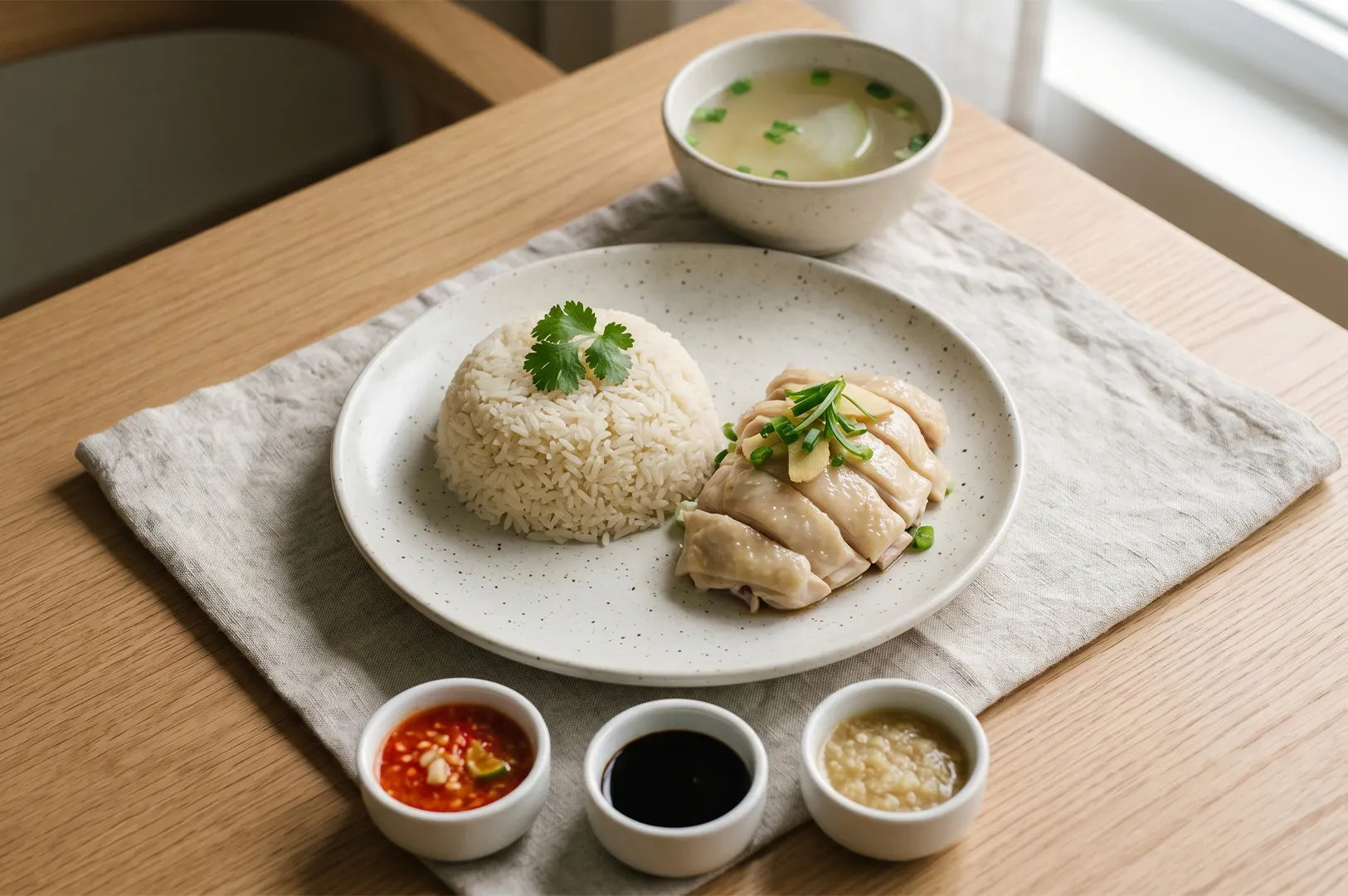
There is a specific kind of heat that hits you while waiting in a chicken rice queue at lunchtime. The fan barely moves the air, the auntie is chopping at lightning speed, and your takeaway box is already sweating before you even pay. I have stood in that exact line at Maxwell Food Centre more times than I can count. For years, I treated my plate of chicken rice as the “safe” choice, the responsible lunch, the meal that surely could not be sabotaging my weight loss diet.
Then one month, nothing changed. My weight stayed put, my energy dipped, and I genuinely could not understand why. I was eating “just chicken rice.” That was when I learned a humbling truth: chicken rice can absolutely fit your goals, but portion size is the key difference between “I’m on track” and “why is nothing changing?“
Let us figure this out together, because you do not have to give up one of the best rice recipes in Singapore to feel good.
How Many Calories in Chicken Rice and Why It’s Easy to Miscount
I think most people miscount chicken rice because they only count the chicken. It is right there in the name, so it feels honest. But the rice is the quiet character doing all the heavy lifting on your calorie count.
When you start counting calories in chicken rice, you quickly realize the numbers swing wildly from stall to stall. One plate at a heartland coffeeshop might cost S$3.50 and come with a modest mound of white rice. A fancier set at a known stall like Tian Tian or Boon Tong Kee can run S$5.50 to S$8.00 with a far more generous portion.
In my experience, the trouble is that no two plates are alike. Rice mound size, the chicken cut, skin-on versus skinless, the oil content, and the sauce amounts all shift the total calories. The same “healthy chicken rice order” can range from a reasonable 450 calories to well over 750, depending entirely on the hands serving it.
Insider knowledge: The rice is not plain steamed rice. It is cooked with chicken fat, chicken broth, and often garlic, ginger, or pandan oil. That glossy shine you love is exactly why a cup of chicken rice carries more calories than the same cup of plain white rice.
Nutritional Breakdown: The Chicken, the Rice, and the Sauce
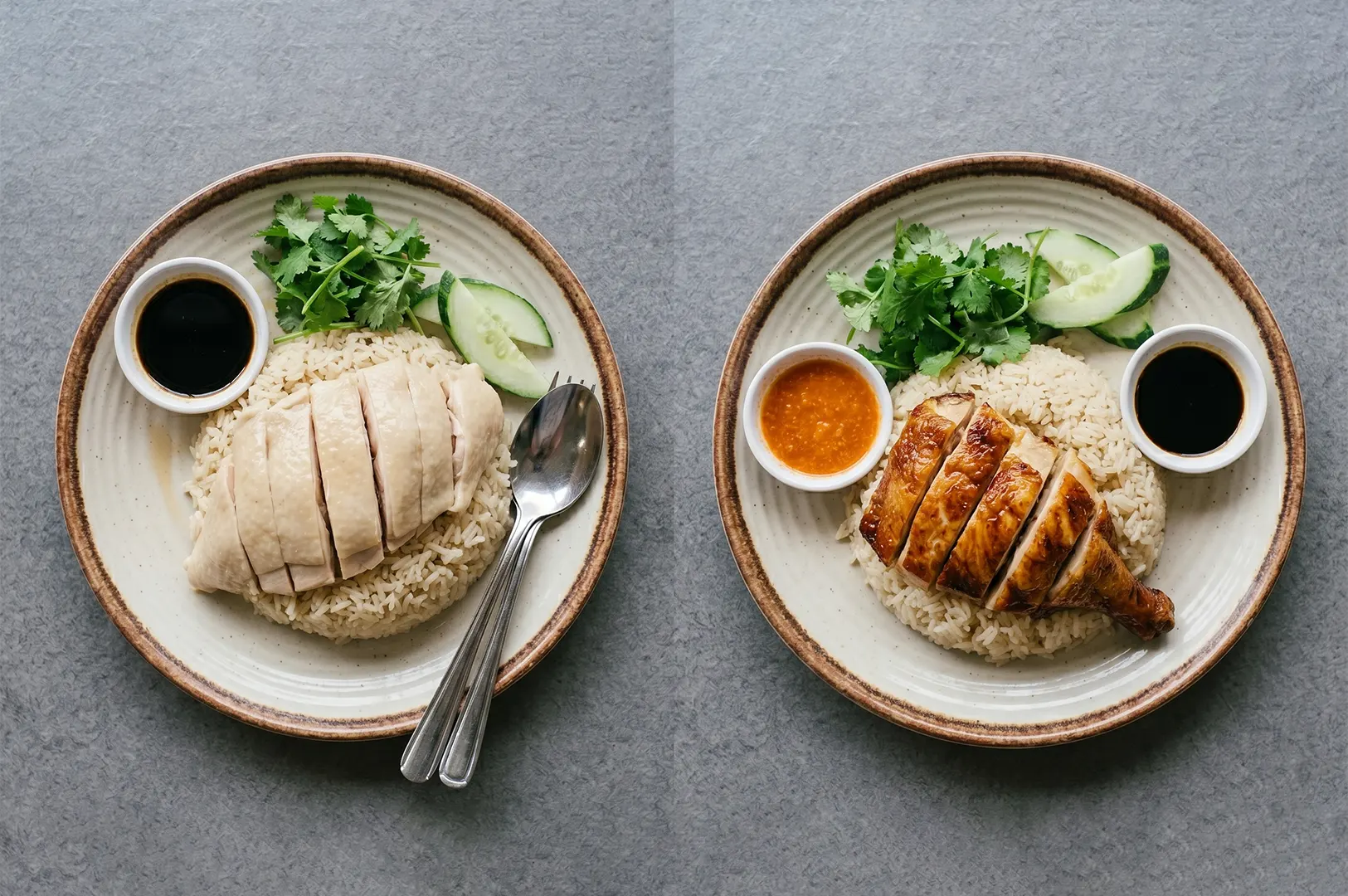
Here is where things get interesting, because each part of your plate pulls a different lever in the calorie intake and nutrient amount.
The Chicken: Steamed Chicken vs. Roasted Chicken
Steamed chicken is lean protein and lower in saturated fat compared to roasted chicken, which often carries crispier, oilier skin. Roasted chicken rice typically has approximately 630 to 660 calories per serving, while hainanese chicken rice averages around 620 calories.
Choosing skinless, bite sized pieces of succulent steamed chicken breast helps reduce fat and calories while supporting muscle repair with ample protein. Dark soy sauce and chilli sauce add flavor but can increase sodium content, so use them in moderation.
When cooking or ordering chicken rice, adding broth to the rice can enhance its succulence and flavor without significantly increasing calories. The pepper used in seasoning adds a subtle kick that complements the succulent chicken perfectly, elevating the overall taste experience.
From my own experience: I used to think chicken rice was a safe, low-calorie meal option. However, after tracking my meals closely, I realized that the calorie content could vary drastically depending on portion size and preparation. One memorable lunchtime at a famous hawker stall, I requested less rice and skinless chicken, and asked for sauces on the side. The dish was just as satisfying, with the succulent chicken still juicy and flavorful, and I felt more in control of my calorie intake.
This simple adjustment helped me continue enjoying my favorite chicken rice while staying on track with my weight loss goals. It’s proof that with mindful choices, you can savor chicken rice without compromising your health or diet.
The Rice: Calorie Dense but Flavorful
The rice in chicken rice is calorie dense because it’s cooked in chicken fat and chicken broth, often with garlic powder and onion for flavor. A standard mound of this rice can easily be 350 to 450 calories per serving, providing carbohydrates that fuel your body. Opting for less rice or substituting with vegetables like broccoli, peas, and carrots can help balance the meal and reduce calorie count.
The Sauces: Rice and Chilli Sauce and Dark Soy Sauce
The rice and chilli sauce that accompanies chicken rice adds approximately 50 to 110 calories per serving, mainly from oil and sugar. Dark soy sauce contributes salt and high sodium, which can be high in this dish. Using sauces sparingly or asking for them on the side lets you control your calorie intake and sodium levels, important for maintaining health.
To enhance taste without extra calories, you can add garlic or reduce heat in your cooking process. Preparing the rice with chicken broth instead of water adds depth and succulence to the chicken rice, making it more flavorful.
When cooking at home, be mindful to reduce heat to avoid overcooking and ensure the chicken is cooked just until no longer pink, preserving its succulent texture. These small adjustments not only improve the taste but also help you enjoy chicken rice while managing calories and sodium intake effectively.
How Long Does It Take to Burn Chicken Rice Calories?

Understanding how many calories chicken rice contains helps you plan your activity. For example, burning approximately 620 calories from a serving of hainanese chicken rice might take:
Running at 8 km/h for about 55–60 minutes
Cycling at moderate pace for 65–75 minutes
Brisk walking for 130–140 minutes
Swimming vigorous laps for 45–50 minutes
High-intensity interval training for 40–45 minutes
Knowing this helps you balance your daily calorie intake and weight loss goals.
Weight Loss and Chicken Rice Healthy Eating Tips
Chicken rice can fit into a weight loss diet when eaten in moderation and with mindful choices:
Choose steamed chicken over roasted chicken to reduce saturated fat and calories.
Skip the chicken skin to lower fat content.
Ask for less oil when the rice is cooked, or request less sauce.
Add broccoli and other vegetables to increase fiber and nutrients.
Use olive oil and heat olive oil carefully at medium high heat when cooking at home to keep fat content in check.
Avoid drinking the accompanying chicken broth soup if you want to reduce calorie intake.
These simple swaps help make chicken rice a healthier meal option without sacrificing flavor.
Portion Estimation at the Hawker Centre: A Practical Guide
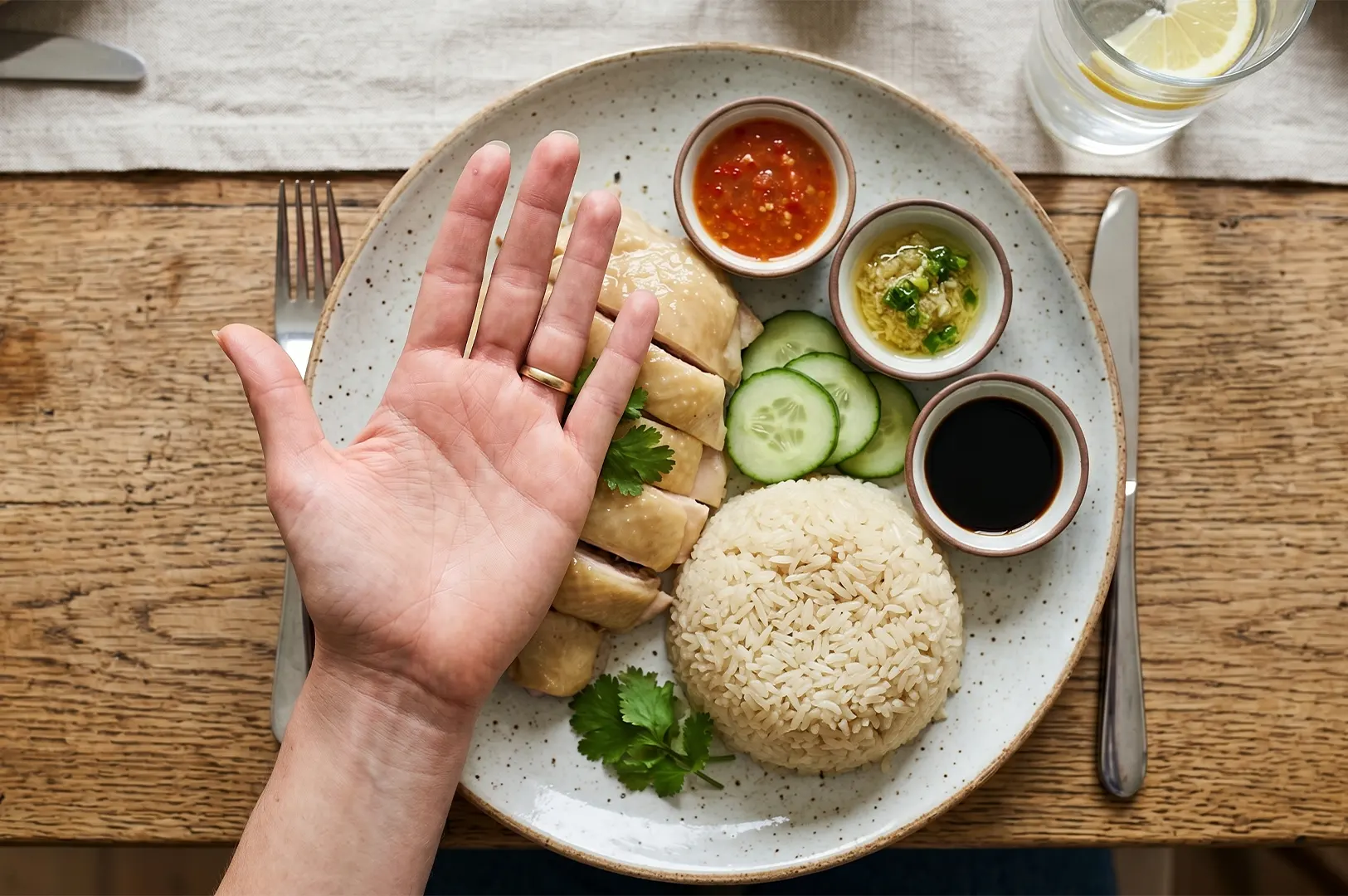
You do not need a scale to estimate calories in chicken rice. Use your hands:
Rice: A portion roughly the size of your clenched fist is a moderate baseline. Two fists is a large mound, common in many stalls.
Chicken: A palm-sized piece (without fingers) is a solid protein portion.
Sauces: A thumb-tip of dark soy sauce or chilli sauce is plenty. Anything pooling on the plate is extra.
Asking for sauces on the side and extra cucumber or a bowl of broth can fill you up with fewer calories and more flavor.
Stop Treating Chicken Rice as a “Cheat Meal“
Chicken rice is not the enemy of your health or weight loss. Mindless portions and extra sauces are. When you understand the nutritional breakdown and calorie count per serving, you can enjoy this flavorful dish with confidence and moderation.
Try just one concrete change this week: order “rice less” at your usual stall, or get sauce on the side. Rest assured, consistency beats perfection, and you get to keep enjoying the chicken rice you love while supporting your health and weight loss goals.
At Healthyfoodguide.com, we always make sure our readers knows what they eat, where they want to eat, and how to stay fit and healthy, that is why we have currated list of restaurants that are vegetarian friendly, just click the link above to explore more.