The lift down to the basement smelled like old air-con and detergent. Not the kind of place you’d expect to find lunch you’d remember.
But I’d come for one thing. Years ago, before it closed, I used to eat at a stall called Thunder Tree (or as regulars knew it by its Chinese name, 擂茶树 Thunder Tree). Their lei cha was the bowl I’d order when I felt like I’d been treating my body badly. Too many late dinners, too much char kway teow, that kind of week. Then one day it was gone. So when I heard the outlet had quietly reopened as Fire Flies in May 2024, I went looking.
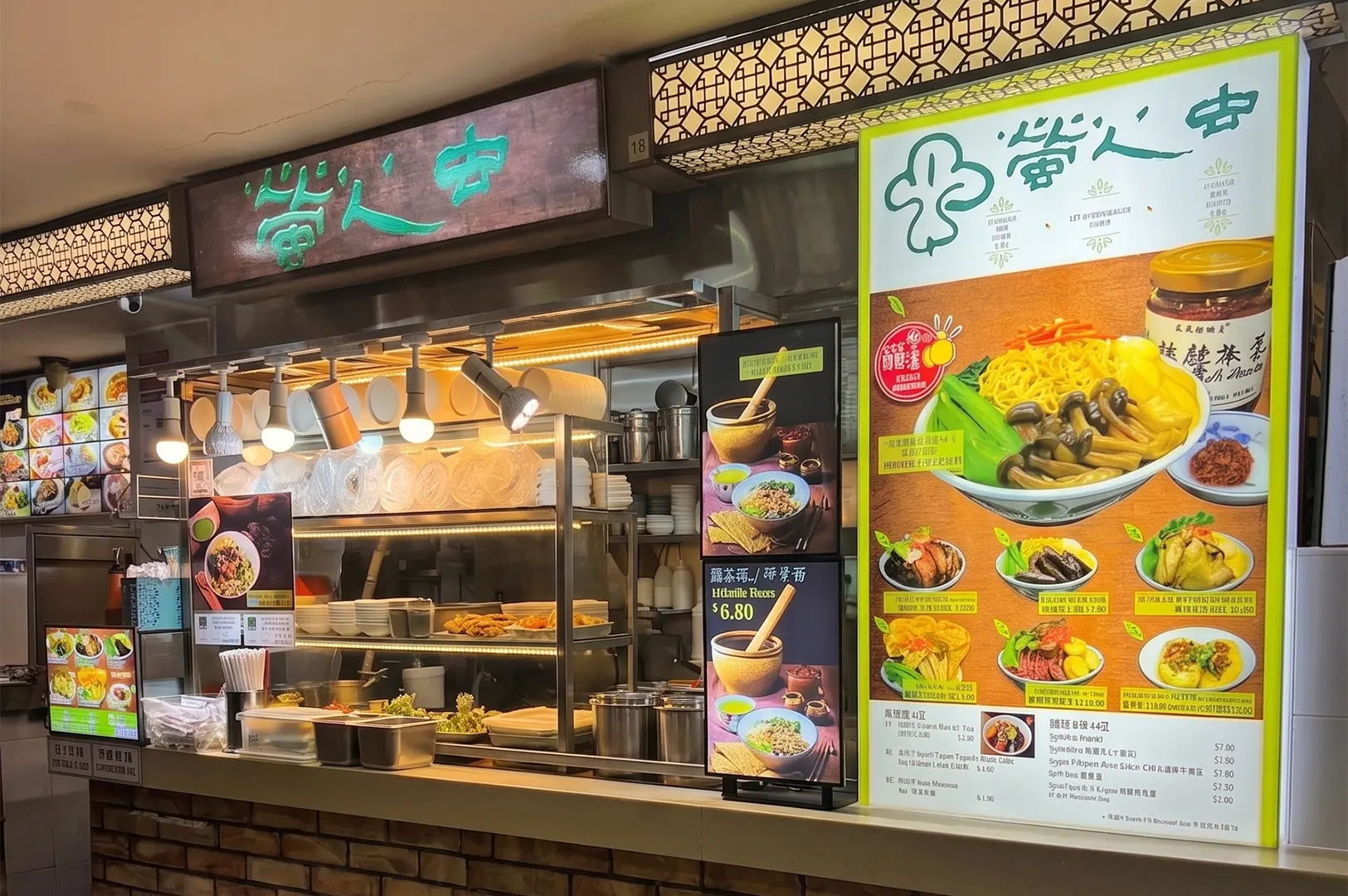
It’s still here, located at People’s Park Centre, #B1-06, at 101 Upper Cross Street. Same basement, same fluorescent hum, same lei cha.
People's Park Centre: Don't Judge It by the Lift
The space is exactly what you’d think. A food court stall in Chinatown, not a restaurant. Shared tables, plastic chairs, trays stacking up at the next stall over. I came on a weekday just before noon, and even then the seats were filling fast. By half past twelve, you’d be hovering with your tray, eyeing strangers’ empty bowls.
There’s no host, no menu booklet, no soft lighting. Just a counter, a handwritten board, and a queue that moves faster than you’d expect. The stall itself is tidy. The greens piled behind the glass look genuinely fresh, not the limp leftovers you sometimes find by afternoon.
If you need a certain kind of atmosphere to enjoy your food, this isn’t your place. But if you’re someone who finds comfort in the ordinary (a cold plastic cup of soy milk, the low hum of lunch crowds, the satisfying sound of a bowl being set down), you’ll feel right at home. I always do.
Fire Flies: The Menu
Fire Flies isn’t trying to do everything. The menu is short, which I think is a good sign. A few core dishes, some sides, and the option to build your bowl the way you want it. Everything here is fully plant-based and vegan: no meat, no lard, no animal products. For anyone navigating that in a Singapore hawker setting, it’s a rare and genuinely useful thing. The stall doesn’t make a big deal of it. They just cook it that way, using clean, organic-leaning ingredients that are good for your body.
Prices are fairly priced, ranging from about $7.80 to $10.80 for the main dishes, with add-ons around $3. For a Chinatown food court, that’s honest value. You won’t leave hungry, and you won’t leave feeling heavy either.
For those interested in exploring more vegetarian hawker options beyond Fire Flies, this article offers a great overview of popular vegetarian hawker centre stalls across Singapore.
Thunder Tree: Where It All Started
Before I get into the food, a bit of context. Thunder Tree (擂茶树 Thunder Tree) was one of those stalls that built a loyal following quietly, the kind that didn’t need fanfare. People who knew, knew. When it closed, there was a real gap. Not just for lei cha, but for what it represented: a healthy, flavorful, fully plant-based bowl in the middle of one of Singapore’s busiest neighbourhoods.
When Fire Flies reopened in its place in May 2024, it gave something back to those of us who’d been searching. Same hands, same recipes, same care. The name changed. The bowl didn’t.
Lei Cha: What It Is and Why It Matters
For the uninitiated: lei cha is a Hakka dish with real history. The name translates roughly to “pounded tea,” and the thunder tea soup at the heart of it is made from a blend of green tea, herbs, and spices ground together into a thick, intensely green liquid.
The health benefits are part of what makes it worth talking about. The herbs traditionally used (green tea, mint, basil, and others) are associated with improving digestion, supporting the immune system, and even modest weight loss when consumed regularly as part of a balanced diet. It’s not a magic cure. But it’s one of those dishes where the food actually does something good for you while tasting like it means it.
If you’re someone who thinks about what you consume, this bowl deserves your attention.
Thunder Tea Rice: The One to Order First
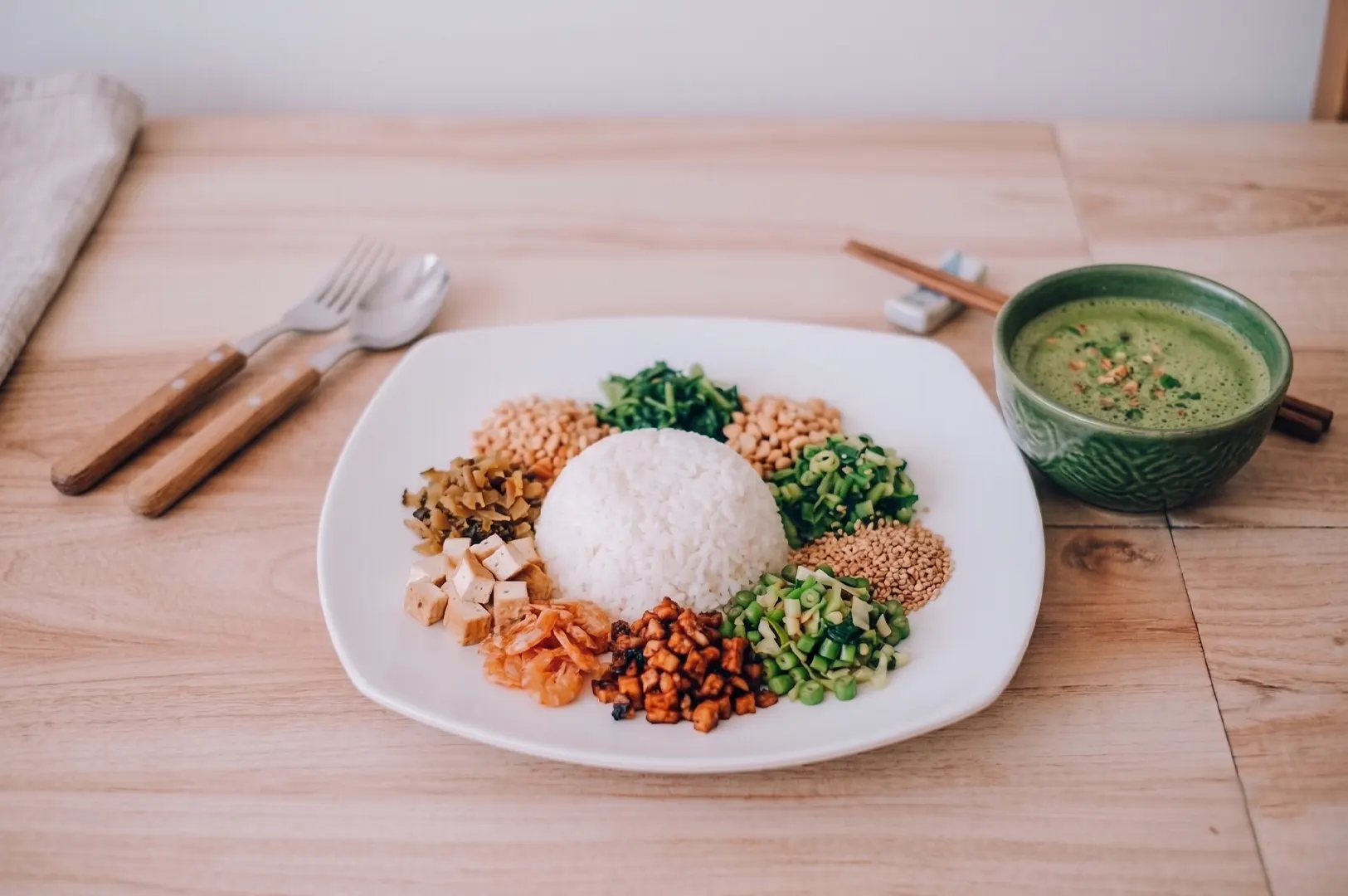
I ordered the Lei Cha Rice ($10.80) first, because that’s what I came back for: the thunder tea rice that used to anchor every visit to Thunder Tree.
It arrived in two parts: a bowl piled with brown rice, a scatter of vegetables, silken tofu, peanuts, preserved radish, long beans, and a little mound of dried shrimp substitute. And a separate cup of thunder tea soup, deep green, almost the color of crushed leaves after a good rainfall.
You pour the soup over the rice yourself. The auntie at the counter told me how much to add. I poured it slowly, watched the green seep into the rice, and took my first spoonful.
The first taste is grassy and herbal, a little startling if you’ve never had it. I’ll be honest: lei cha is an acquired taste. Some people take one sip and quietly put it down. But underneath the herbal edge there’s salt from the preserved radish, crunch from the peanuts, a faint sweetness in the tea, and a chewiness from the long beans that grounds the whole thing. It builds with every bite. By the end of the bowl, I was scraping for the last peanuts.
The texture variety is what keeps you eating. Soft tofu, crunchy peanuts, chewy beans, tender rice. Every spoonful has something different going on. It sounds simple, and it is. But it’s been carefully put together.
It’s the kind of meal that leaves you full but light. No grease sitting in your chest an hour later. No post-lunch slump. Just the good kind of full, the kind that comes from real ingredients cooked with real intention.
Lei Cha Rice vs. Bowl: Getting the Ratio Right
A small thing worth noting: the portion of thunder tea rice here is quite substantial. A food blogger I came across described it as filling enough to carry you through the day, and I’d agree. If you’re ordering for the first time, resist the urge to load up on add-ons until you’ve had half the bowl. The rice expands a little once the tea soup is poured over it, and it’s easy to over-order.
Start with the base, add a piece of braised tofu on the side, and see how you go. You can always add more next time, and there will be a next time.
Kolo Mee: The Gentler Entry Point
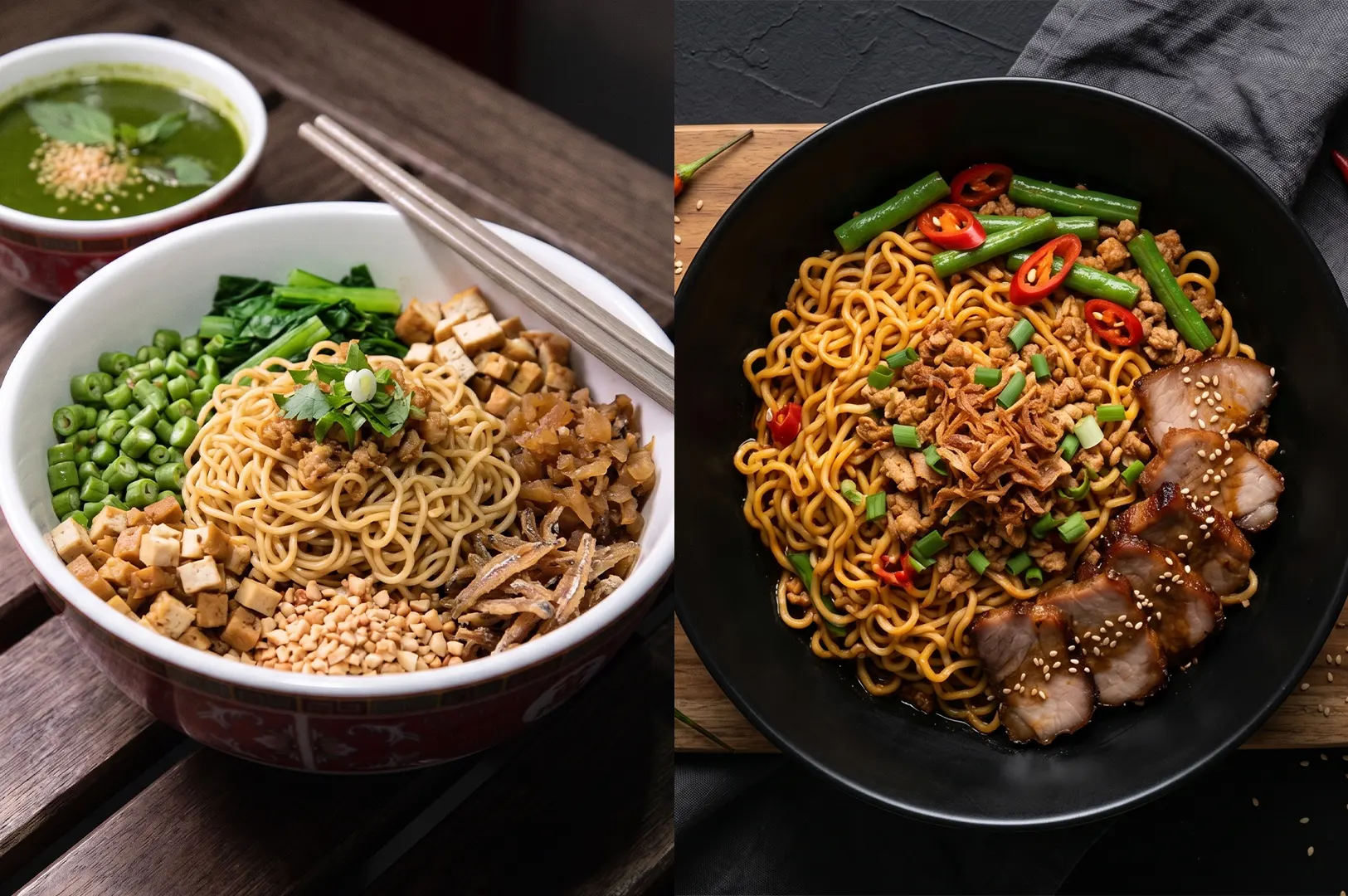
The friend who came with me refused to drink “leaf soup,” which I respect. She ordered the Lei Cha Kolomee ($10.80) instead, and I had a few bites.
This one keeps the lei cha soup on the side and gives you springy kolo mee noodles topped with the same peanuts, beans, taukwa, and fresh greens. The noodles had a good, firm bounce. The toppings were the same quality as the rice version, clearly prepared with the same care. The herbal soup sat in a small cup beside it, optional, ready when you were brave enough.
If you’re new to lei cha, this is the gentler entry point. You get the flavors without committing to pouring the soup over everything. My friend ate the noodles, skipped the soup, and left happy. Honestly, fair enough.
We also shared the Signature Chili Kolomee ($7.80). It’s different: no herbal soup here. Instead, a sesame-oil-style sauce with a mild, steady spicy warmth. Mushrooms with a nice earthy chew. Beancurd puffs that had soaked up the sauce beautifully. Fresh, crunchy greens on top. I did wish the noodles had a bit more bite, and the carrot strips were slightly firm for my taste. Minor things. The overall bowl was still satisfying, and at $7.80, it’s the most affordable main on the board, nicely priced for a lighter lunch or a shared spread.
Thunder Tea: More Than Just a Soup
On my second visit, I paid more attention to the thunder tea itself, the soup that makes this whole thing worth talking about. It’s made fresh. You can tell because the color is vivid, not dull or pre-bottled looking. The herbs are ground to order, or close to it. The result is a tea soup that tastes genuinely alive, not like something that’s been sitting in a container since morning.
There’s a reason people come back to lei cha specifically for improving digestion. The blend of herbs (green tea, basil, and others) does real work when you consume it regularly. I’m not craving supplements or wellness drinks after a bowl here. The soup does what it’s supposed to do, and it does it quietly.
Sides Worth Adding
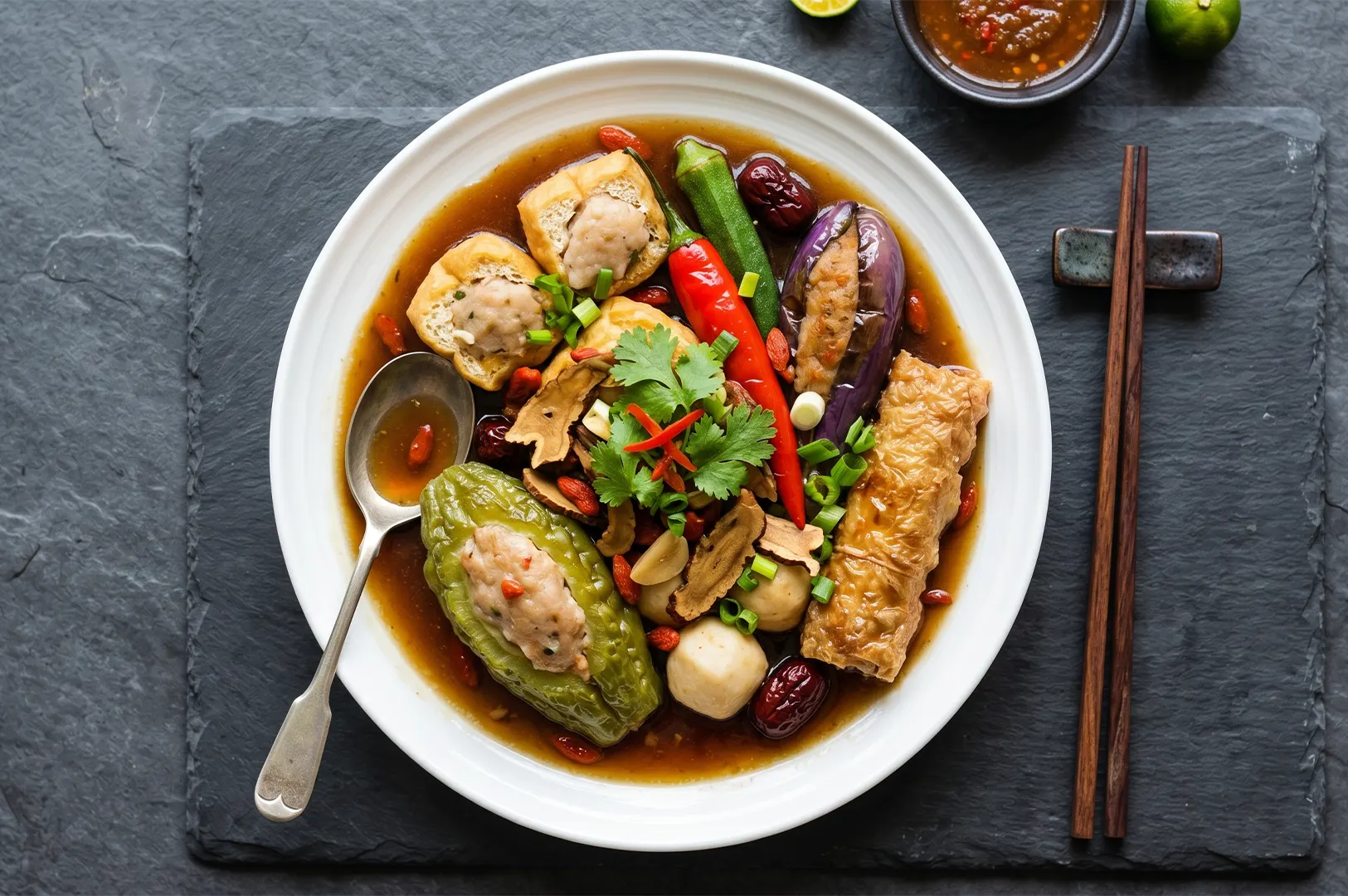
On my second and third visits, I tried a few of the sides. The Yong Tau Foo with Angelica Sauce ($10.80) is worth ordering if you want something gentler. The angelica sauce is earthy and slightly medicinal in the best possible way, the kind of thing that reads as old-fashioned but hits you as genuinely nourishing. The yong tau foo pieces were fresh and tender, not the rubbery kind you sometimes get.
The braised tofu is good added to any bowl as a top-up. Soft, deeply savoured, and satisfying in a way that adds protein without heaviness. A few pieces on the side gave the meal more staying power without making it feel indulgent.
擂茶树 Thunder Tree: Service and the People Behind the Counter
Service surprised me. At a basement food court in Singapore, you don’t go in expecting much. But the auntie at the counter actually paused to explain how to eat the rice with the soup. She saw me hesitating and just told me, plainly and kindly, without being asked. No impatience, even with a line forming behind me.
On my second and third visits, it was the same. Friendly, patient, and happy to help first-timers. Several reviews I came across mentioned the same thing: staff who take a moment to explain the food. With lei cha, that matters more than people give credit for. The dish is unfamiliar to many diners, and a little guidance at the counter changes the whole experience. It’s the kind of service that doesn’t announce itself but stays with you.
What To Know Before You Visit
Bring cash. It’s cash only at this outlet. There’s an ATM in the mall, but save yourself the detour and come prepared.
Go before noon or after 2pm. Lunch hour in Chinatown’s office-and-mall zone gets genuinely crowded. If you arrive between 12 and 1:30pm, expect to hover with your tray. I’ve had the best luck arriving around 11:30am, or coming back after 2pm when it quiets down.
Get there via Chinatown MRT, Exit D. From the exit it’s a short walk into People’s Park Centre. Head straight to the basement. The stall is at #B1-06, at 101 Upper Cross Street.
They’re closed on Sundays. Open Monday to Saturday, 10am to 7pm. This has caught me out more than once; plan your visit on a weekday or Saturday to be safe.
Budget around $10 to $13 per person for a main with an add-on. The portions are substantial, especially the thunder tea rice, which is filling enough to carry you through the afternoon.
There’s no seating reservation. It’s a food court. You find a table, you guard it, you eat. That’s the deal.
Who Is Fire Flies For?
Fire Flies is squarely for anyone who wants a genuinely healthy, fully plant-based meal in a hawker setting without making a production of it. Vegans and vegetarians will find it one of the more reliable options in the area. Lei cha regulars who mourned the loss of Thunder Tree will feel like something was returned to them.
It’s also good for the office luncher who’s tired of the usual. For the person who’s been eating heavily and wants a reset meal. For anyone craving something fresh and nourishing at night after a long day, or anyone curious about a dish that’s part Hakka heritage, part Singapore food history, and worth understanding before it disappears again.
It won’t work for everyone. If you need ambience, a guaranteed proper seat, or the comfort of something rich and oily, this isn’t your meal. And if herbal flavors put you off on principle, the lei cha will be a hard sell no matter how kindly it’s explained.
Final Verdict
I’ve been back three times since I first revisited after it reopened. That’s a reliable enough answer.
Fire Flies isn’t asking you to love it. It’s just there, in its quiet basement on 101 Upper Cross, making the same bowl it’s always made: for the people who already know what it is, and the ones just finding out. If you’re still building your list, this guide to vegetarian spots in Singapore is worth a read before your next meal out. The room won’t impress you. The soup will, if you let it.